What’s the price of chasing the impossible? The Marta Misztal interview
A Polish adventurer who has climbed the Seven Summits and the Crown of Europe, Marta Misztal combines an appetite for the improbable with the pragmatism of someone who has to fit extraordinary adventures around an ‘ordinary’ working life.
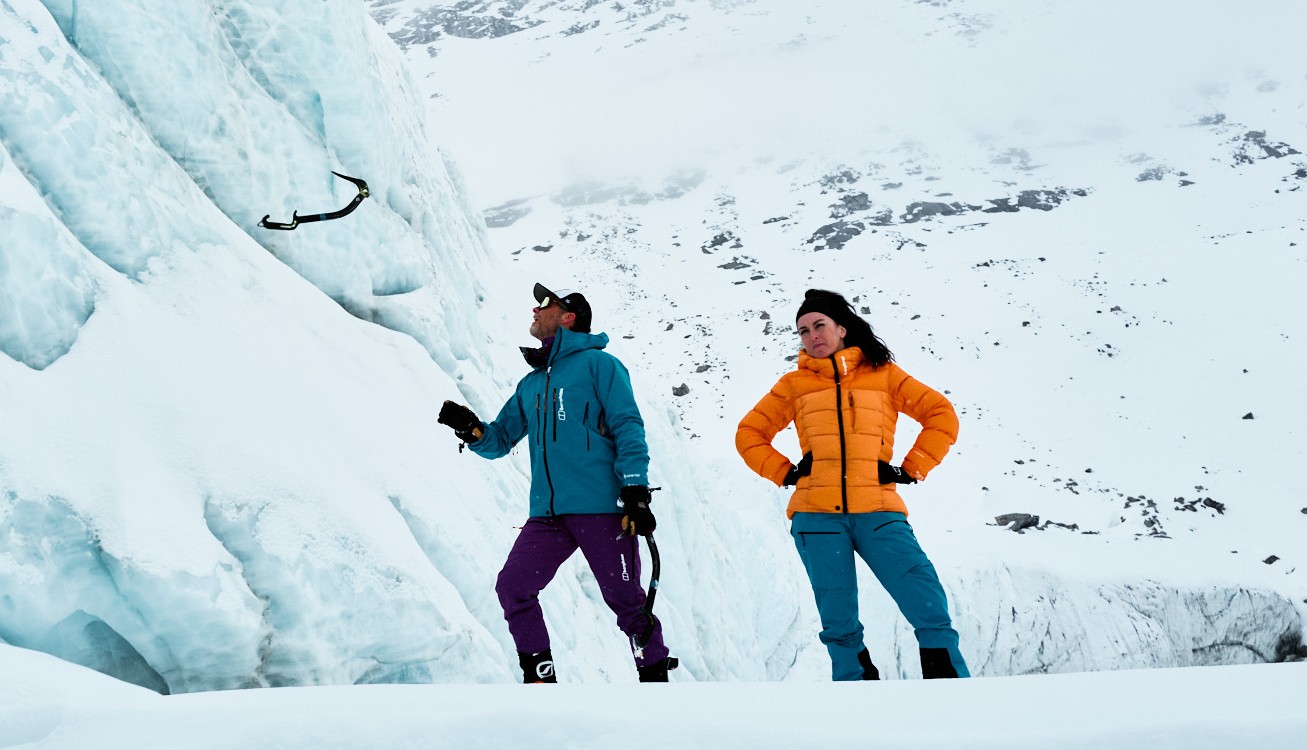
Her latest expedition took her to Baffin Island, where she joined Leo Houlding and an international team for a distinctly Arctic mix of climbing, skiing and exploration.
We caught up with Marta on her return to talk about the realities behind the summit shots, the fine art of knowing when to turn back, what it takes to make an expedition happen in 2026 and why, despite everything she’s achieved, she still has a rather long list of mountains to climb.
Baffin Island is often on the bucket-list of many an adventurer but it is the sort of place that makes even the most experienced feel pretty insignificant. What was the moment on this expedition when you realised that the reality of being there was going to be different from the adventure you’d imagined?
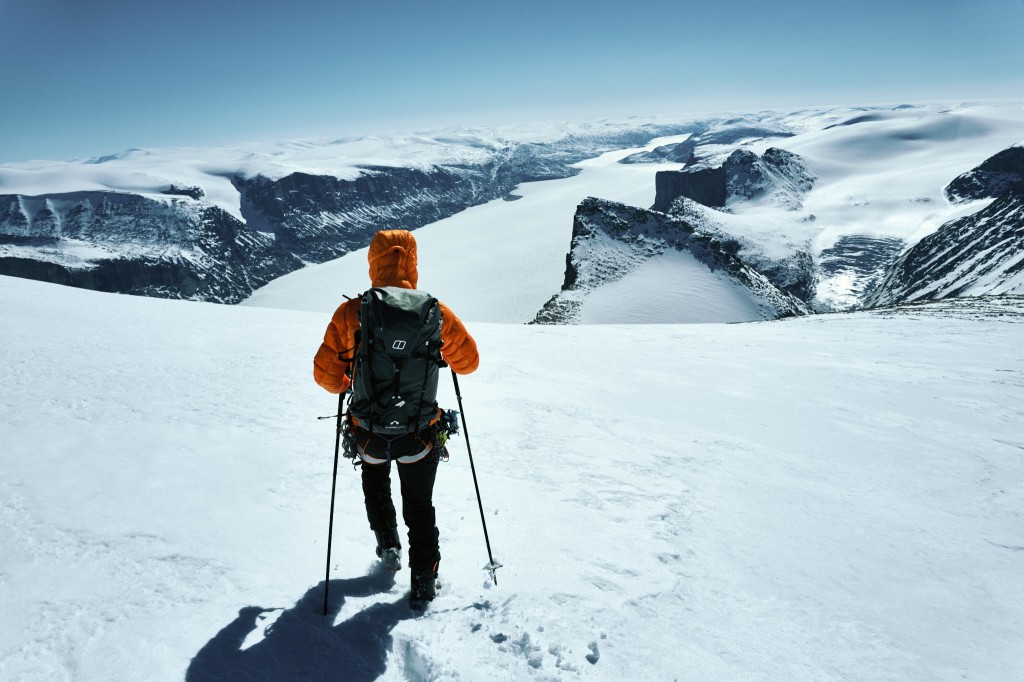
I think the biggest shock for me was the sheer scale of the cliffs. I knew Baffin Island was home to some of the tallest rock faces in the world, but knowing something and actually seeing it with your own eyes are two completely different things.
I’ve climbed Everest, the highest mountain in the world, so I’m no stranger to enormous mountains. But this was something else entirely. When you look up at Everest from Base Camp, you’re already standing at over 5,600 metres, and the summit is still several kilometres away. You know it’s huge, but because of the distance, it’s difficult to really appreciate its scale.
On Baffin Island, we were standing on the frozen fjord, literally at sea level, looking straight up at these gigantic, almost vertical walls of rock. Some of the cliffs in the area rise close to a kilometre, and they’re not somewhere far away on the horizon. They’re right in front of you. You can literally walk up and touch them.
I remember one particular moment when we were exploring Sam Ford Fjord on sleds. We stopped beside this absolutely enormous wall that stretched for kilometres. I just sat there staring at it, completely mesmerised. There was this huge ledge about halfway up, and I remember looking at it thinking, “Holy fuck, that’s high!” And then realising that was only HALFWAY! Above it was another enormous section of rock disappearing into the clouds. I genuinely couldn’t get my head around the scale of it.
That’s mad that even Everest didn’t quite prepare you for that?!
Totally. And I think what makes Baffin Island even more extraordinary is how little we see of it. Everyone knows Everest. We’ve all seen thousands of photos and videos of it. We’ve seen El Capitan in Yosemite and thought, “Wow, that’s a massive cliff!” But Baffin Island is so incredibly remote that relatively few people ever get to experience these landscapes in person. You don’t see these cliffs all over social media, so nothing really prepares you for them.
I think that was my biggest surprise. After all the mountains I’ve climbed and places I’ve travelled to, I didn’t expect to be quite so blown away by the sheer size of a rock face.
But there I was, sitting on a sled, staring upwards with my mouth open, thinking, “How on earth is this even real?”
The Beak’s first ascent took the team ten days, with five nights suspended on the cliff and temperatures reaching -27°C. You were part of the wider expedition team. What were you experiencing during those ten days that someone following the achievement from afar would never see or understand?
Although I wasn’t there for the full ten days of the climb, I was lucky enough to witness something that most people never get to see – the incredible amount of preparation that goes into attempting a first ascent.
I’m a mountaineer, not a big-wall rock climber, so while I’m familiar with expedition life, this was a completely different world for me.
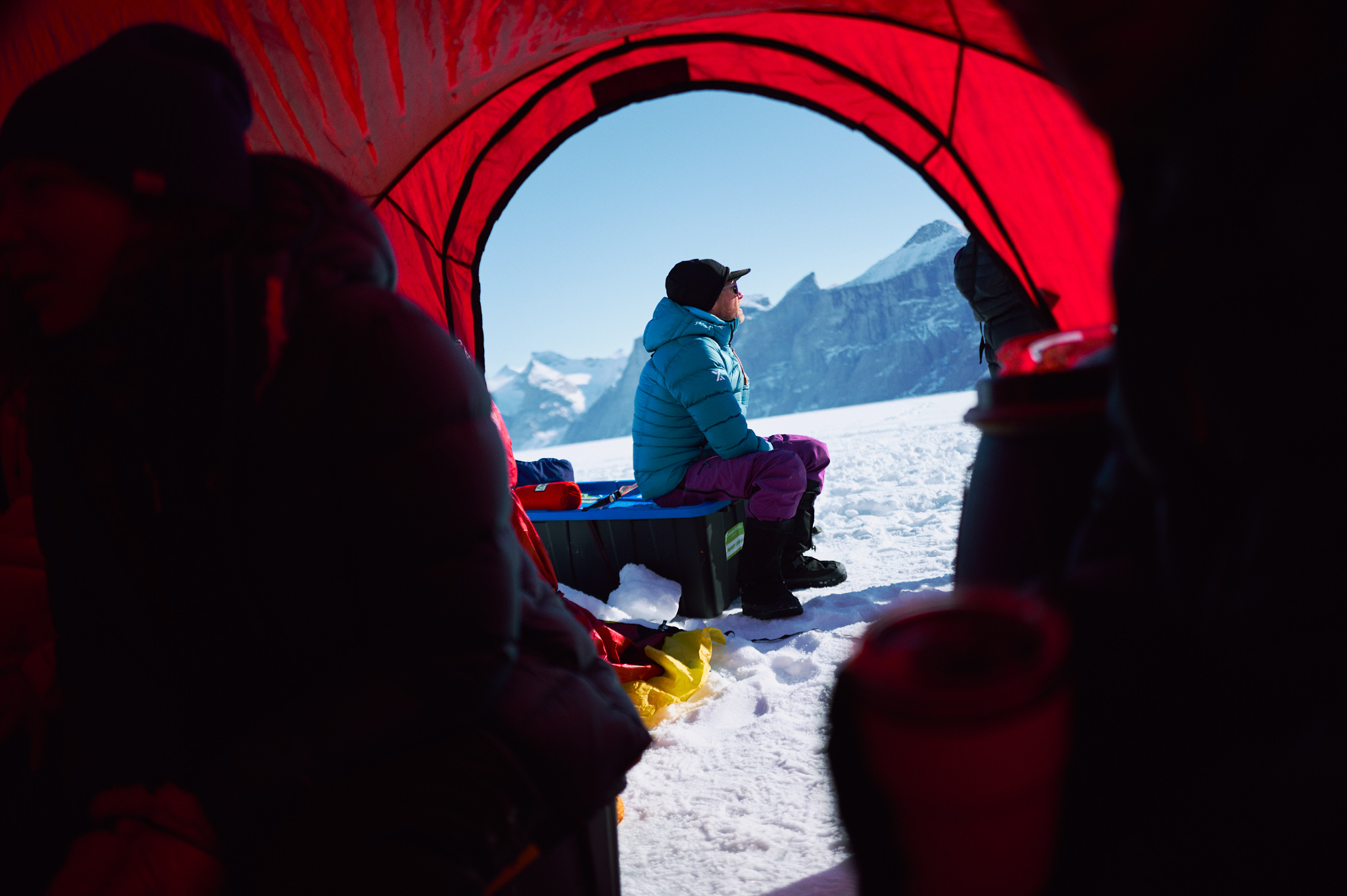
What fascinated me most was just how much time the guys spent studying the wall. And I mean HOURS! They would travel out to the cliff, take photos and videos, fly drones, use binoculars and telescopes, and examine every little detail. Then they’d come back and do it all over again. They were essentially trying to solve a giant puzzle, figuring out a route that nobody had ever climbed before.
And it wasn’t exactly a warm, sunny day at the crag either! It was always in a shade, and of course we were in the Arctic, surrounded by snow and ice, with freezing temperatures and wind. I remember joining them on some of these scouting trips, sitting there wrapped up warm with my Kindle and a flask of hot chocolate, while they spent hours staring at the same piece of rock. On another day, I even went snow-kiting on the frozen fjord while waiting for them to finish.
We left a day or two after they started climbing, so I didn’t witness the full ascent. But I got to see the part that rarely makes it into the headlines – the patience, planning and countless hours of preparation before anyone even sets foot on the wall.
When you see a photo of someone celebrating a first ascent, you see the achievement. What you don’t see is all the work that made it possible. And I think that’s what impressed me most.
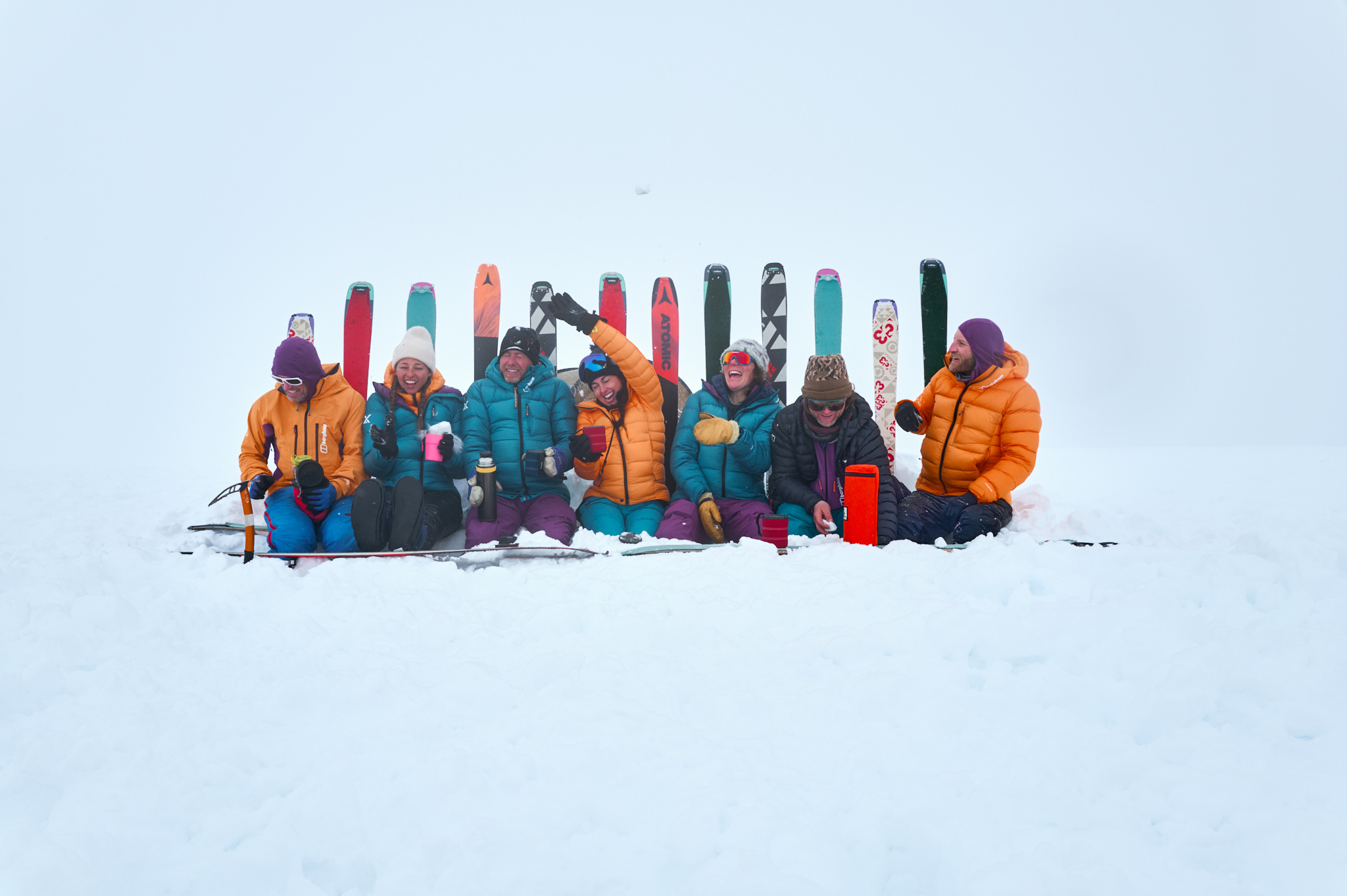
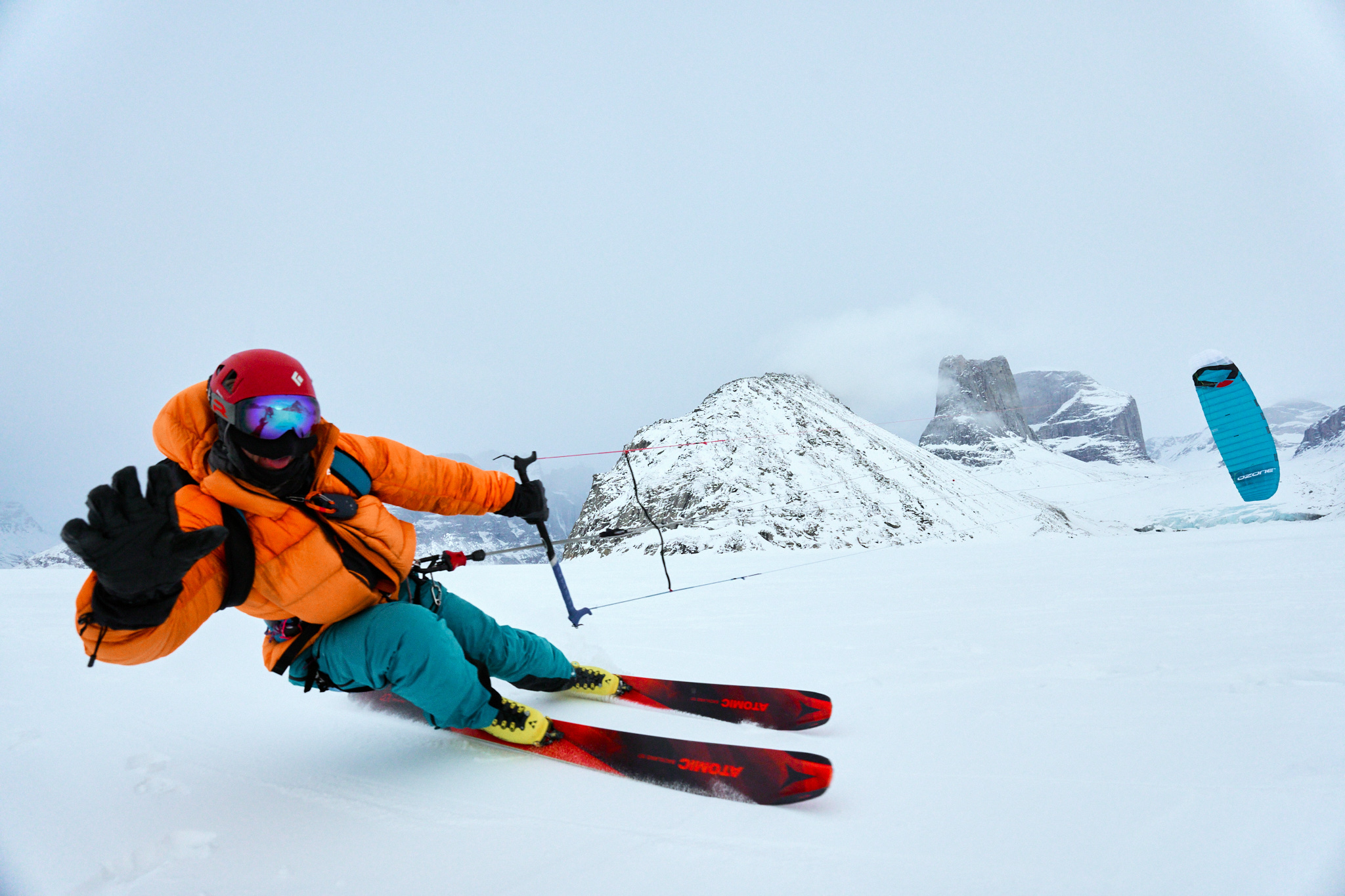
The team had a pretty extraordinary range of ways to experience Baffin Island: climbing, ski touring, snow-kiting, paragliding and even sleeping in an igloo you’d built yourselves. Which experience changed your relationship with the place most, and why?
Snow-kiting, without a doubt! I’d done some kitesurfing before and even went on a snow-kiting trip to practise ahead of Baffin Island, but nothing could have prepared me for the sheer scale of the place.
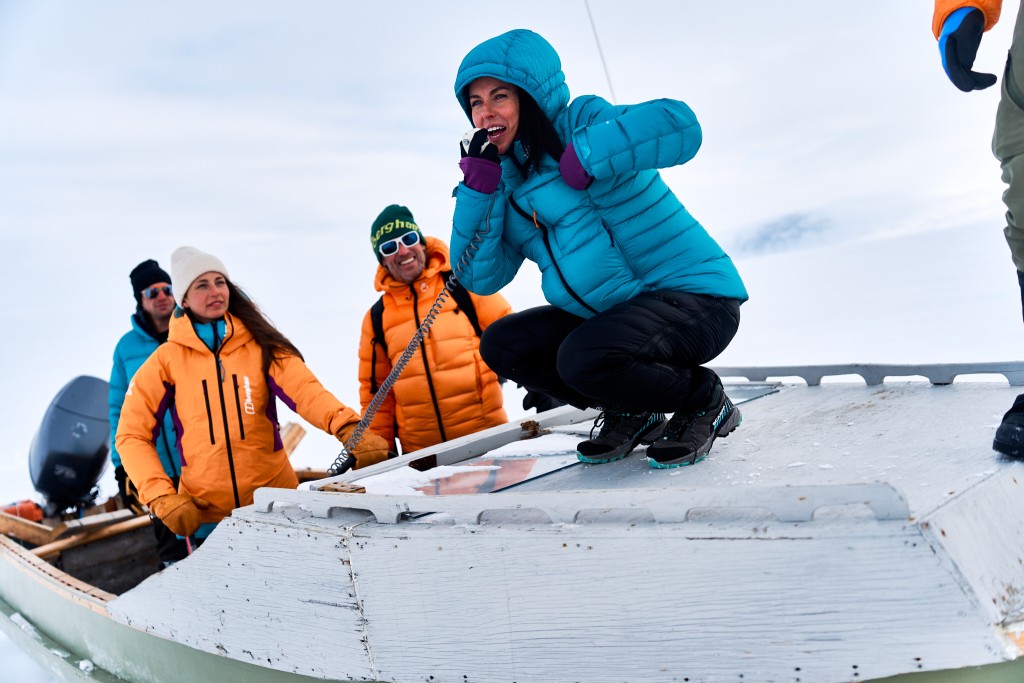
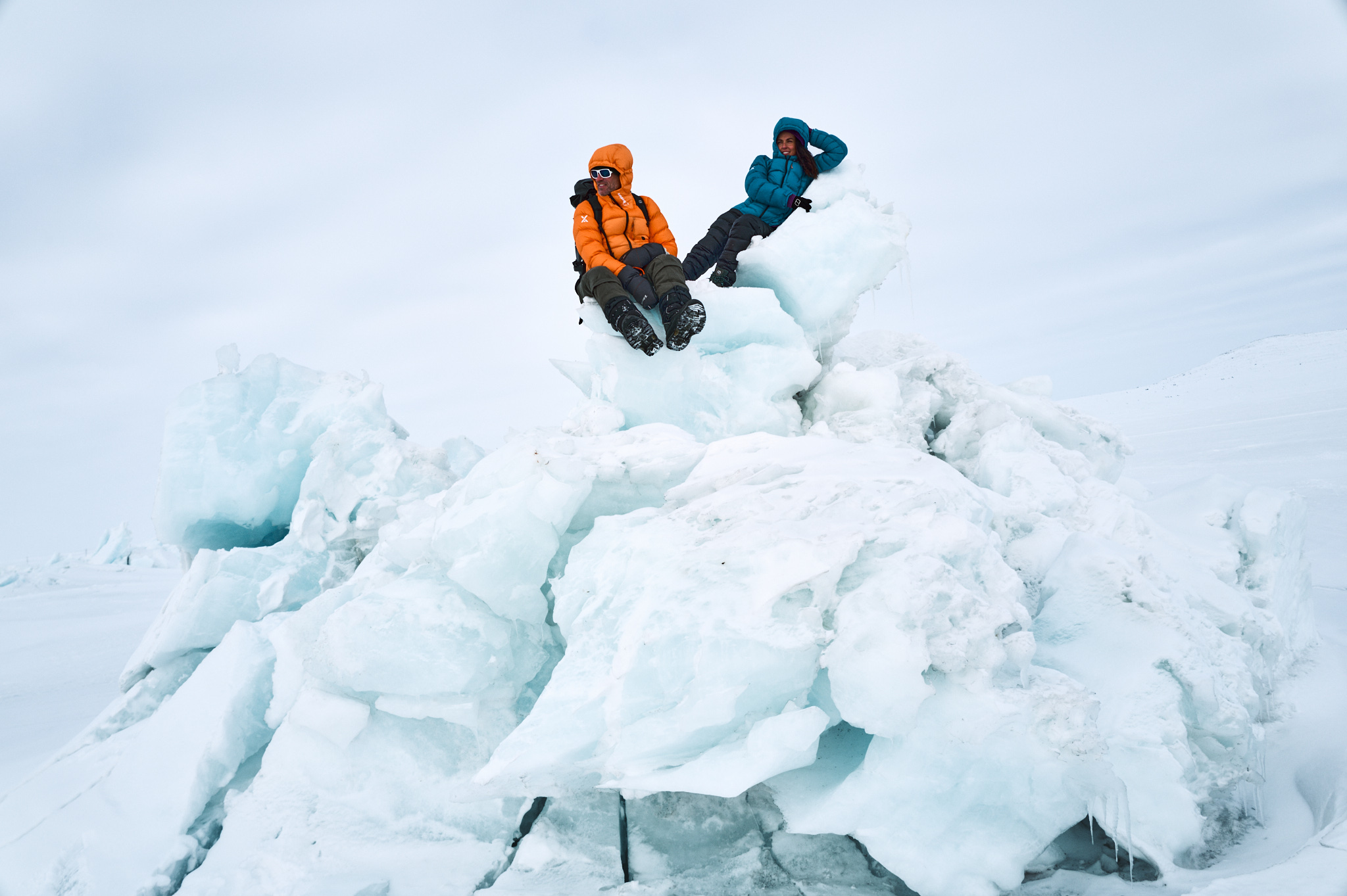
The frozen fjord was basically one enormous playground. You could kite for kilometres in one direction without having to turn around. It was absolutely incredible! Although there was one small detail that made it slightly more exciting – we were in polar bear territory. And given how fast polar bears can run, combined with my rather questionable snowkiting skills, I definitely wouldn’t fancy my chances in a race against one!
One day, after the guys had finished skiing, they headed back to base camp with our snowmobile and sled, while I decided to snow-kite back instead – about 10 kilometres across the frozen fjord – with Sarah, who’s an experienced snow-kiter.
The route was straightforward. Our base camp was right at the bottom of a massive cliff that you could see from miles away, so getting lost wasn’t really a concern.
I set off before Sarah while she was still preparing her kite. At some point, I realised I couldn’t see her anymore. The snowmobile and sled were long gone, the tents were too far away to see, and suddenly I was completely alone in the middle of this enormous frozen fjord.
Not a single person in sight. And then I crashed.
I cracked my goggles and ended up with a little black eye. Luckily, I was wearing a helmet, and it wasn’t anything serious, but that was the moment I realised just how badly things could have gone wrong.
There was no phone signal, nobody around to help, and I was in the middle of polar bear territory. I knew exactly where I was going, but if I’d seriously injured myself, I would have been in real trouble.
Suddenly, improving my snow-kiting skills became significantly less important than getting back to camp in one piece!
I slowed down, played it safe and eventually made it back without any further drama.
It was one of the most incredible experiences of the expedition, but also a reminder that in places like Baffin Island, the line between an amazing adventure and a potentially dangerous situation can be surprisingly thin.
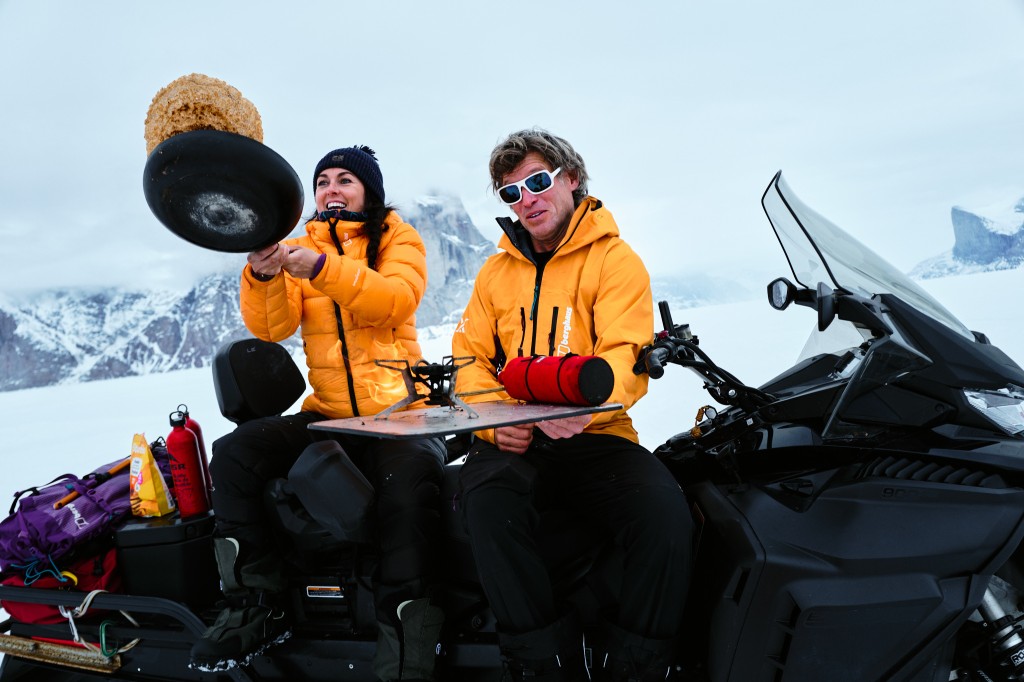
Expeditions are often presented as a succession of spectacular moments. But what was the least glamorous or most absurd part of this one – the bit that would never make the highlight reel, but perhaps tells us the most about the experience?
Probably the complete lack of personal hygiene!
We spent two weeks in the Arctic with no proper showers, so wet wipes became our best friends. And it’s not like we were just sitting around doing nothing! We were skiing, ice climbing, snowkiting and generally being very active, which meant plenty of sweating. And let’s be honest, there’s only so much a wet wipe can achieve after days of sweating and wearing the same clothes!
We obviously tried to keep things as clean as possible, especially when sharing food and living in close quarters, but there’s nothing particularly glamorous about expedition hygiene.
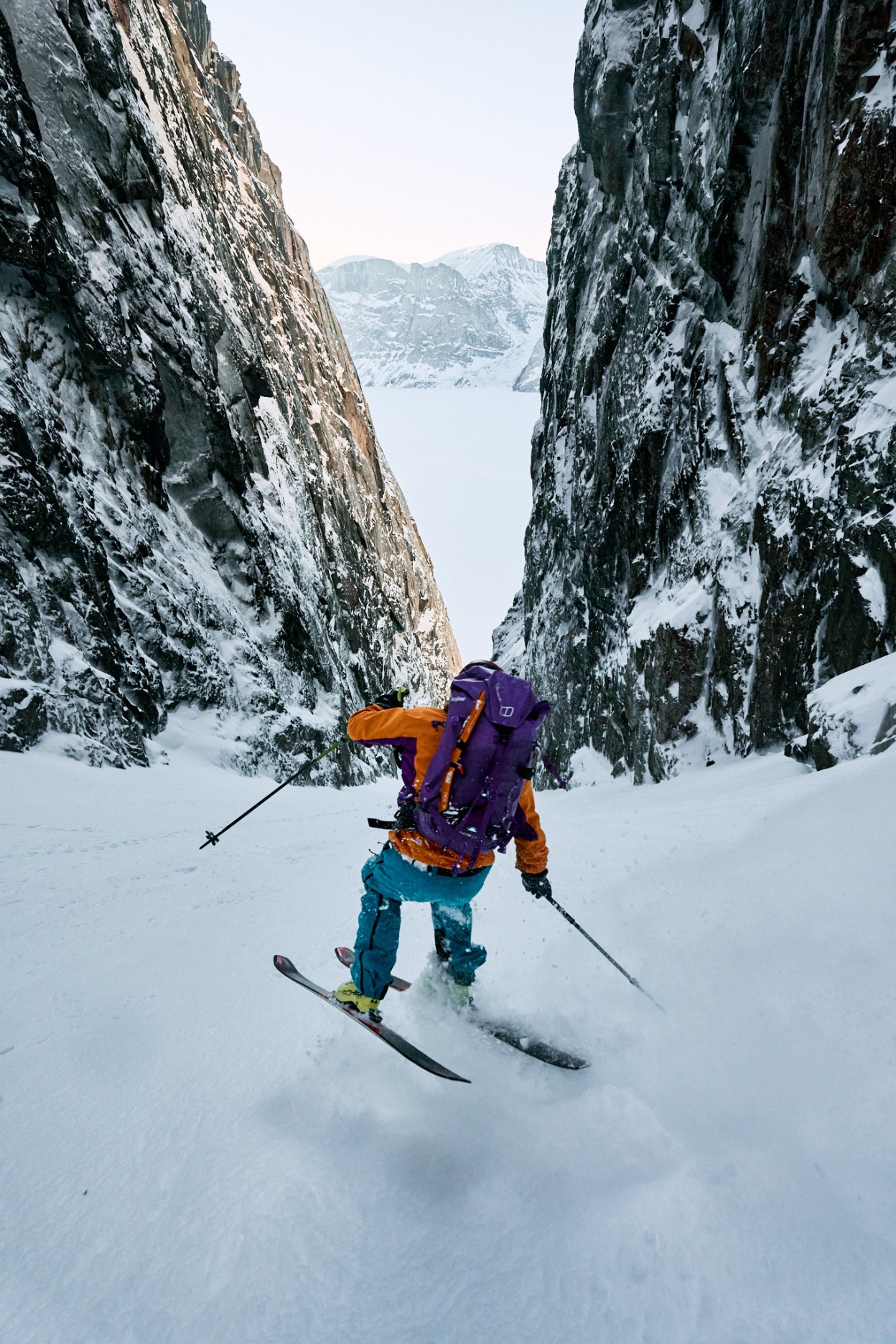
I did manage to have one “shower” during the entire trip. We were surrounded by ice, which we could melt for water, but heating enough for a proper shower wasn’t exactly practical. So I melted enough ice to fill one Nalgene bottle with warm water, stripped completely naked outside in the Arctic cold and somehow managed to wash my entire body with just that. Washing my hair was definitely out of the question!
And honestly, it felt AMAZING! Forget luxury spas – after days of sweating and relying on wet wipes, standing naked in the Arctic with one bottle of warm water felt like the height of civilisation!
It’s funny how expeditions completely reset your idea of luxury. Back home, a hot shower is something you take for granted. In the Arctic, one bottle of warm water was enough to make me feel like I’d checked into a five-star hotel!
If we could drop you straight back into one moment from Baffin Island – with all the cold, discomfort and logistics magically taken care of – which moment would you choose to relive, and why that one?
Definitely building an igloo with Richie and then actually sleeping in it!
I’d seen igloos before, including one someone built in Antarctica, and I remember regretting not sleeping in it. So when we built one on Baffin Island, I wasn’t going to miss my chance again!
And surprisingly, it was actually quite warm inside! Although I wouldn’t say I had the most peaceful night’s sleep, knowing we were in polar bear territory and my lovely little Arctic home didn’t even have a door. Not that a door made of snow would have offered much protection against a polar bear anyway!
Yeah I’m not sure they do doors.
I even had dinner in there. I boiled some water to prepare my meal and quickly discovered that our igloo wasn’t exactly designed with ventilation in mind. The whole place filled with steam! I tried filming a little Instagram Reel, but it was a complete disaster. You couldn’t see a thing. I’d basically turned my igloo into a steam room!
But honestly, it was such a cool experience. Skiing, ice climbing and snowkiting are all incredible, but you can do those things in other parts of the world. But how often do you get to build your own igloo in the Arctic and then spend the night in it?
That’s definitely a memory I’ll treasure!
You’ve pursued the Seven Summits and the Crown of Europe while building a life and career outside professional mountaineering. What does adventure give you that your working life, however successful, simply cannot?
I think work develops your skills, but adventure develops you as a person.
Don’t get me wrong, I’ve learned a lot throughout my career in finance. It’s taught me discipline, problem-solving and logical thinking. But adventure takes personal growth to a completely different level.
When you’re on a mountain, nobody cares about your job title, how much money you earn or how successful you are back home. None of that matters. What matters is how you deal with challenges, how you react when things don’t go to plan, how you treat the people around you and how you push yourself beyond what you thought you were capable of.
I genuinely believe that adventure shapes your personality. It builds confidence, resilience, patience and adaptability, but it also teaches you humility. No matter how experienced you think you are, there’s always something new to learn, and nature has a pretty good way of reminding you that you’re not as important as you might think!
But perhaps the biggest thing adventure gives me is that incredible feeling of being alive. The excitement of exploring somewhere new, the freedom, the curiosity, the people you meet and the experiences you share. Even after climbing Everest, I can still find myself sitting on a sled in Baffin Island, staring at a cliff with my mouth open, completely blown away by what I’m seeing.
And I love how adventure changes your perspective on everyday life. After two weeks in the Arctic, a single bottle of warm water feels like a five-star spa experience. Suddenly, all those things we take for granted become little luxuries.
I enjoy the stability my career gives me, and it certainly helps fund my rather expensive hobbies! But adventure is what makes me feel truly fulfilled. It’s not just something I do in my spare time. It’s a huge part of who I am.
There is a difference though, between wanting to do something extraordinary and actually reorganising your time, money and life to make it happen. When you look back, what did you have to change about yourself – or give up – to become the person who could pursue these ambitions?
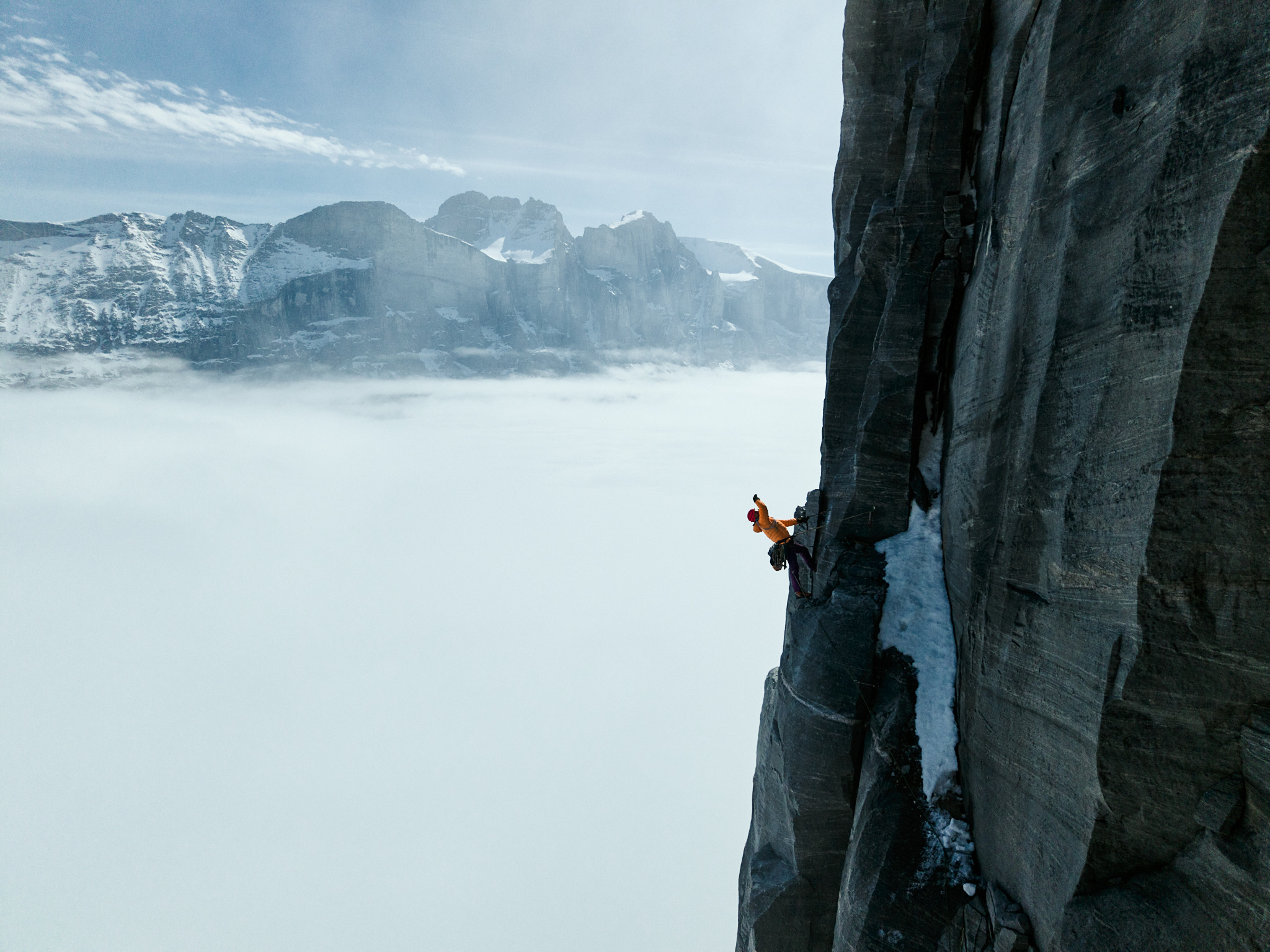
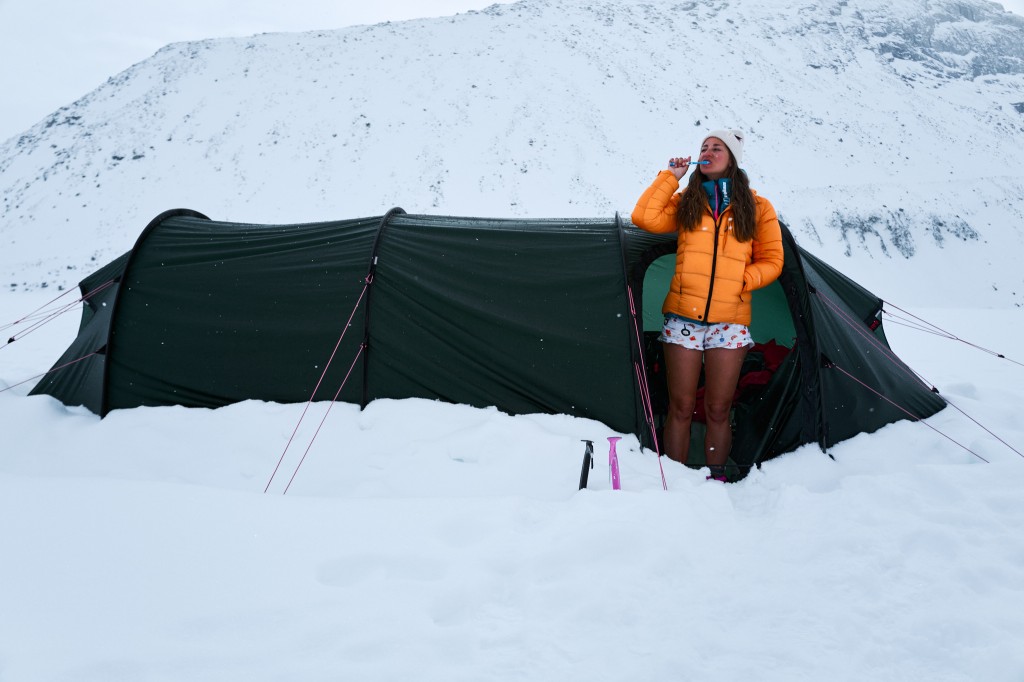
I think the biggest change has been completely rethinking what I consider important and how I choose to spend my time and money.
I’m 42, I have a decent career in finance, and I could afford to live comfortably on my own. But instead, I choose to share my home with housemates and rent out rooms because I’d rather put that money towards adventures.
Hang on, you house-share on purpose?
Over the years, I’ve lived with countless strangers coming and going! I didn’t go to a hairdresser for 22 years before climbing Everest, I’ve had my nails done probably five times in my entire life, and I regularly sleep in my very normal car on weekend adventures to save money on accommodation. It’s definitely not a glamorous lifestyle!
I’ve also become incredibly selective about how I spend my time. I’ve recently decided to cut back on social drinks and lunches unless they’re somehow connected to adventure. Not because I don’t value friendships, but because both my time and money are limited, and I know exactly where I want to invest them.
But some sacrifices have been more significant than others. I left my home country 21 years ago, and although I’m very close to my family, I’ve only spent three Christmases with them in all that time. Travelling home during the holidays is expensive, and it also means using annual leave that I could spend on expeditions. That’s probably one of the harder trade-offs.
My career has also been affected. I’ve watched people with similar experience progress faster professionally, while my own promotions have sometimes been delayed, with my climbing commitments becoming part of those conversations. And because my adventures are often what people find most interesting about me, I’ve sometimes felt that colleagues see me more as “the adventurous girl” than as someone who’s equally dedicated to her career.
But ultimately, I don’t see these choices as sacrifices in the traditional sense. They’re priorities. I’ve chosen experiences over possessions, adventures over comfort, and a life that excites me over one that simply looks successful on paper.
I might not have the nicest home, the most expensive clothes or perfectly manicured nails, but I’ve stood on top of Everest, explored Antarctica and experienced places most people will never get to see.
And I wouldn’t trade those memories for a nicer sofa!
Funding your own expeditions while working in finance in London suggests a particular relationship with money, security and freedom. How do you decide what is worth spending on an adventure, and what are you willing to sacrifice elsewhere to afford it?
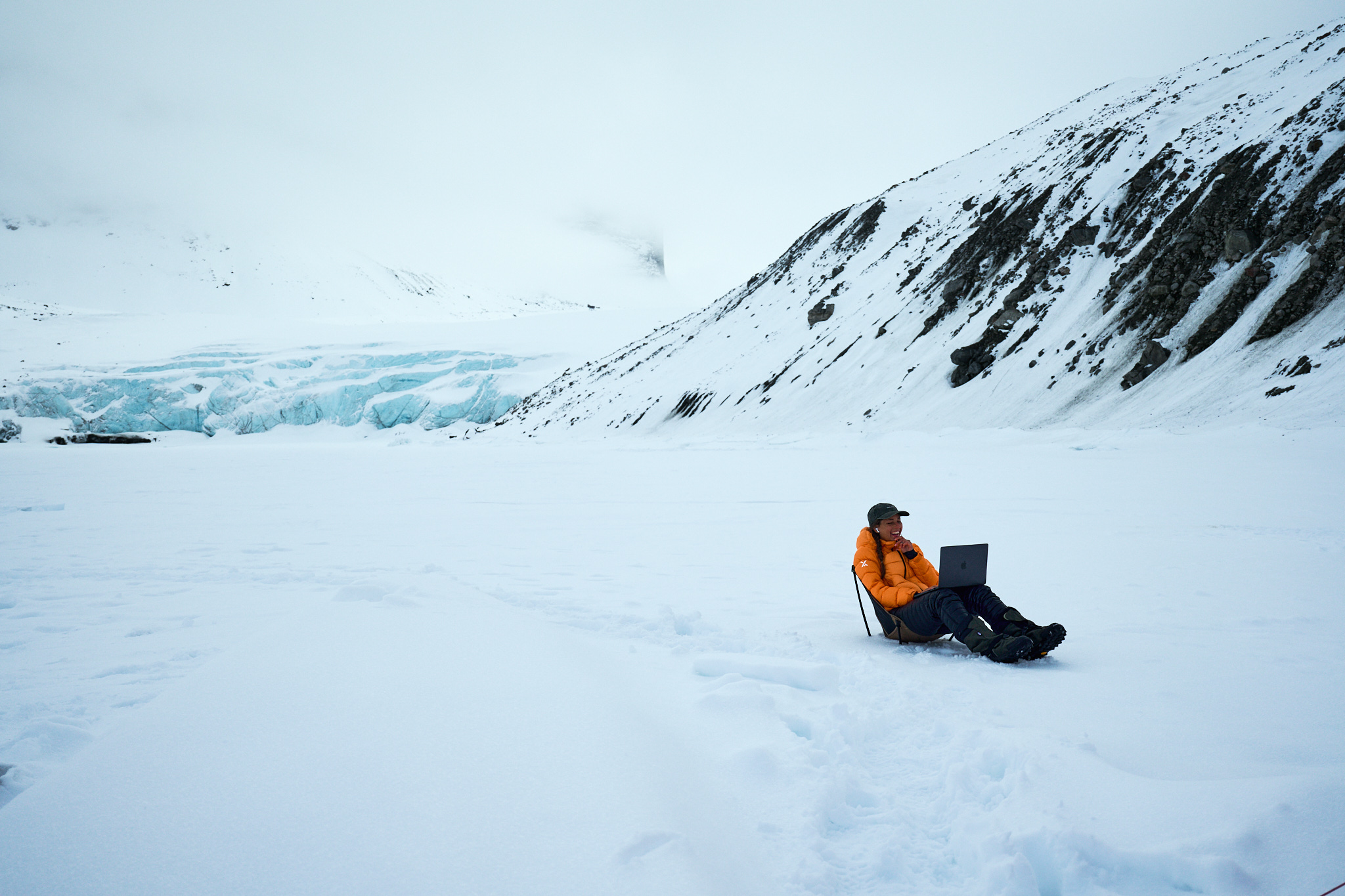
I think my relationship with money is quite simple – money is a tool that allows me to live the life I want, rather than something I want to accumulate for the sake of it.
I’ve been to Everest twice. The first time, I didn’t reach the summit, but I still spent every penny I’d planned to spend, including the significant costs of Sherpa support and tips. And do you know what? I don’t regret a single penny! I had an incredible experience, met amazing people and learned so much along the way. Of course, summiting on my second attempt made it even more rewarding, but I never considered the first expedition a waste of money.
I think that’s because, for me, the value of an adventure isn’t measured by whether I reach the summit. It’s everything that happens along the way – the experiences, the people, the challenges and the memories.
Of course, working in finance, I understand the importance of financial security, and I make plenty of sacrifices elsewhere to afford these adventures. But I also believe that money can be earned again, while time, health and opportunities aren’t guaranteed.
Some people spend their money on designer handbags, expensive cars or luxury holidays. I spend mine on climbing mountains, sleeping in freezing tents and occasionally paying ridiculous amounts of money to be cold, exhausted and uncomfortable!
And somehow, I always come back thinking it was worth every penny.
People tend to describe ambitious adventurers as fearless, driven or unusually resilient. Which of those descriptions, if any, feels misleading when applied to you? What do people misunderstand about the psychology of someone who repeatedly chooses to do difficult things?
Definitely fearless! I think that’s one of the biggest misconceptions about people who do extreme adventures.
I’m scared of plenty of things! But I’ve noticed something interesting over the years – the more you push yourself outside your comfort zone, the further that comfort zone expands.
I think of fear almost like a muscle. The more you exercise it by doing things that scare you, the more comfortable you become with situations that once seemed terrifying. Your threshold for fear gradually moves higher, and things that used to frighten you become completely normal.
But just like a muscle, you have to keep exercising it. If you stop challenging yourself, that comfort zone can start shrinking again.
So I don’t think I’m naturally any braver or more fearless than anyone else. I’ve simply spent years putting myself in situations that push my boundaries, and over time, I’ve become more comfortable with uncertainty, discomfort and fear.
And importantly, that doesn’t mean I’m never scared. I absolutely am! I just don’t automatically see fear as a reason not to do something.
I think that’s the biggest misconception. People assume you have to be fearless to do extraordinary things, when actually, you just have to keep expanding what feels possible to you.
On an expedition like Baffin, risk isn’t an abstract concept. It has consequences for you, the people around you and the people waiting for you at home. How has your understanding of acceptable risk changed as you’ve gained experience — and is there anything you would have done differently ten years ago?
I think the biggest thing experience has taught me is that the more serious the expedition, the less room there is for unnecessary risk.
People sometimes assume that because you climb mountains like Everest, you must enjoy taking risks. But actually, the more experience I gain, the more cautious I become about the risks I can control.
On a big expedition, there are already so many things that can go wrong, many of which are completely outside your control. Weather, avalanches, altitude sickness, falling ice… the list goes on. So why would you deliberately introduce another risk that you could easily avoid?
Yeah, there’s a difference between becoming more comfortable with fear and becoming too comfortable with danger.
I remember being on an expedition with someone who decided to go swimming in absolutely freezing glacial water. He ended up developing pneumonia and needed oxygen after summiting. Suddenly, what might have seemed like a bit of fun became a problem for the whole team, because the Sherpas had to look after him, which meant their attention was taken away from other climbers.
And that’s something I think people sometimes forget. On an expedition, your decisions don’t just affect you.
I’ve also learned that the accidents we hear about are only a small part of what actually happens on big mountains. During my first Everest expedition, we had climbers evacuated with serious altitude-related illnesses, people falling from ladders in the Khumbu Icefall and even a guide who needed evacuating. And that was just within our own small team!
But perhaps the biggest lesson has been learning when to turn around.
I’ve turned back on five mountains, including Everest on my first attempt. Our team made a collective decision to abandon the summit attempt because we considered the conditions too dangerous. Other, completely separate teams chose to continue, and some successfully reached the summit that year. But that doesn’t mean our decision was wrong. We made the best decision we could based on the conditions and information available to us.
That must be quite difficult psychologically, though. Particularly when you know that other people have made a different decision and apparently been rewarded for it.
I returned to Everest for a second expedition and successfully reached the summit. And I think that makes the lesson even more valuable – turning back doesn’t mean giving up on your dream. Sometimes it simply means waiting for a better opportunity.
I’ve also turned back on mountains in Bulgaria, Andorra, Sweden and Liechtenstein. Of course, it’s disappointing when you’ve invested so much time, money and effort into getting there. But reaching the summit isn’t worth ignoring serious warning signs.
There’s also something else I’ve noticed as I’ve got older – my appetite for risk is getting smaller.
Ten years ago, I was probably more willing to accept certain risks than I am today. Experience has taught me that being a good adventurer isn’t about taking as many risks as possible. It’s about knowing which risks are worth taking and which ones are completely unnecessary.
I’m planning to attempt K2 next year, and at this point in my life, I see it as my last attempt at a mountain of that level of seriousness.
Not because I’ve lost my love for mountaineering. Quite the opposite! I still have so many mountains I want to climb and places I want to explore. But I’m becoming increasingly aware of how much risk I’m willing to accept, and I know that threshold is changing.
I think that’s part of gaining experience too – recognising that just because you’re capable of doing something doesn’t necessarily mean you’ll always want to take the risks involved.
Because reaching the summit is wonderful, but getting home to tell the story is rather important too!
You were sharing an expedition with people whose relationships with climbing and adventure may be very different from your own. What did spending time alongside someone like Leo Houlding teach you about the difference between being exceptionally good at adventure and being good at making adventure happen?
Leo showed me that being good at adventure and being good at making adventure happen are two completely different things.
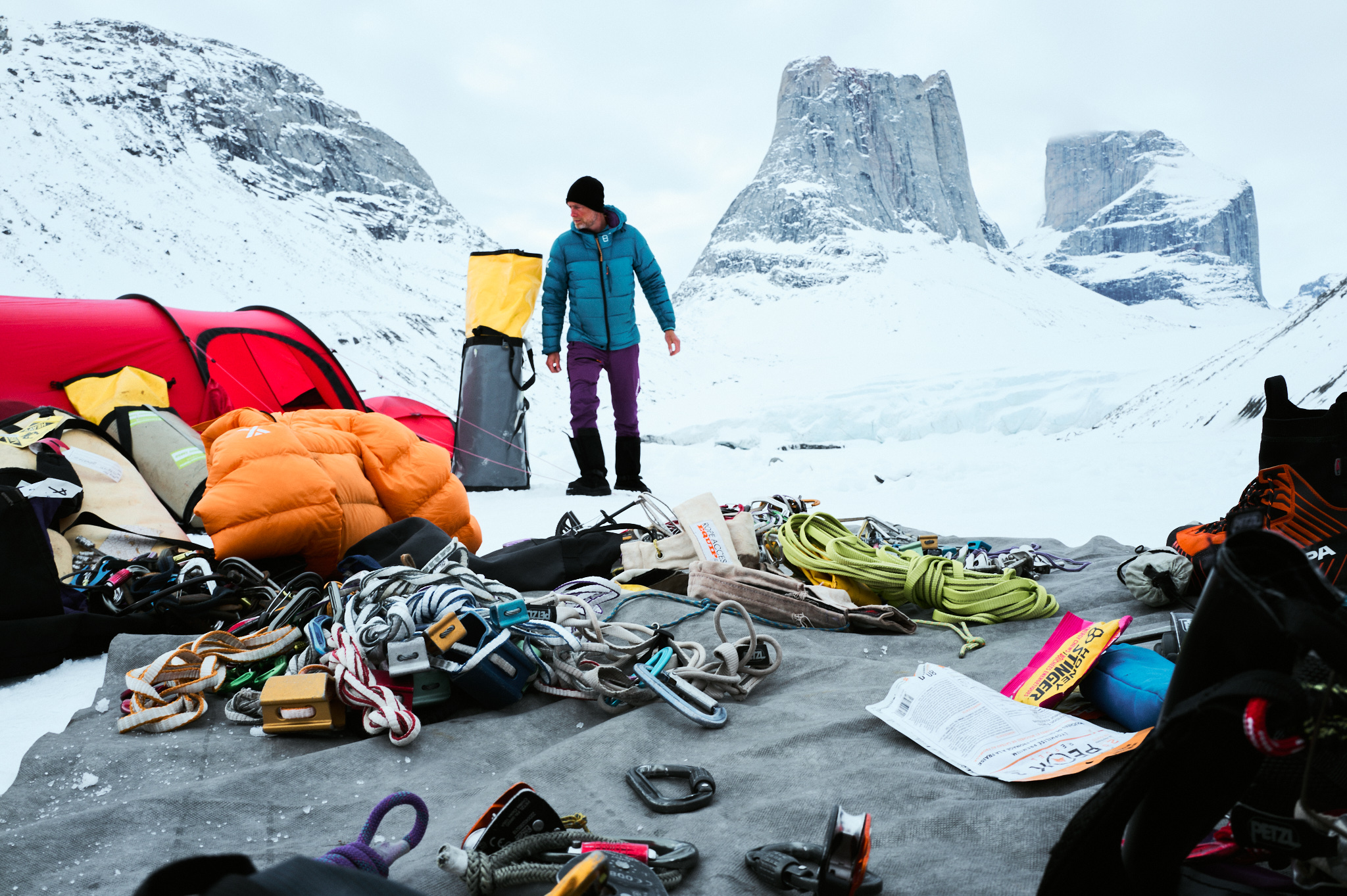
On Baffin Island, we had nine people coming from different parts of the world, and we weren’t going there to do just one activity. We had skiing, snowkiting, ice climbing, paragliding and big-wall climbing, all requiring completely different equipment.
Even something as simple as choosing the right ski boots became complicated. I’m a snowboarder, but I also needed skis for snowkiting. Different types of skiing require different boots, and we had strict limits on how much equipment we could bring.
Multiply those decisions by nine people, add multiple kites, climbing gear, cameras, food, Arctic clothing, spare equipment and all the logistics of getting everyone to one of the most remote places on Earth, and you start to appreciate the scale of what Leo had organised.
And unlike organising a weekend in Europe, you can’t exactly pop into the nearest shop if you’ve forgotten something. Imagine getting all the way to the Arctic and discovering nobody had packed the toilet paper!
I already had some understanding of how much work goes on behind the scenes because I’ve organised quite a few adventures myself. When I started pursuing the highest peaks in every European country, a challenge now known as the Crown of Europe, I began organising trips so other people could join me.
People hear, “We’re going to Bulgaria to climb the highest mountain,” and assume you’ve simply booked some flights and a hotel. But before making that decision, I might have researched mountains in ten different countries, comparing the weather, seasonal conditions, flights, travel times, guides, accommodation and all the other logistics involved in getting a group there and back over one weekend.
So I know how much planning is involved. But Leo takes it to another level, particularly because he also takes his wife and two children on extraordinary adventures to remote parts of the world. I’m single, so I have a lot of freedom when planning my own adventures. Organising something like that with children involved adds a completely different level of responsibility and complexity.
I think that’s what spending time with Leo really reinforced for me. Being an exceptional climber is one thing, but having the vision, organisational skills and determination to turn an ambitious idea into an expedition that other people can actually experience is something else entirely.
The climbing might be what makes the headlines, but without all that work behind the scenes, there wouldn’t be an expedition in the first place.
And after Baffin Island, I really hope I get to join Leo on another adventure someday!.
Berghaus supported this expedition with its AW26 Extrem range. In an environment where the consequences of equipment failure can be serious, what does genuinely good outdoor kit give you beyond warmth, protection and technical performance? Does it change how you think, feel or behave when you’re out there?
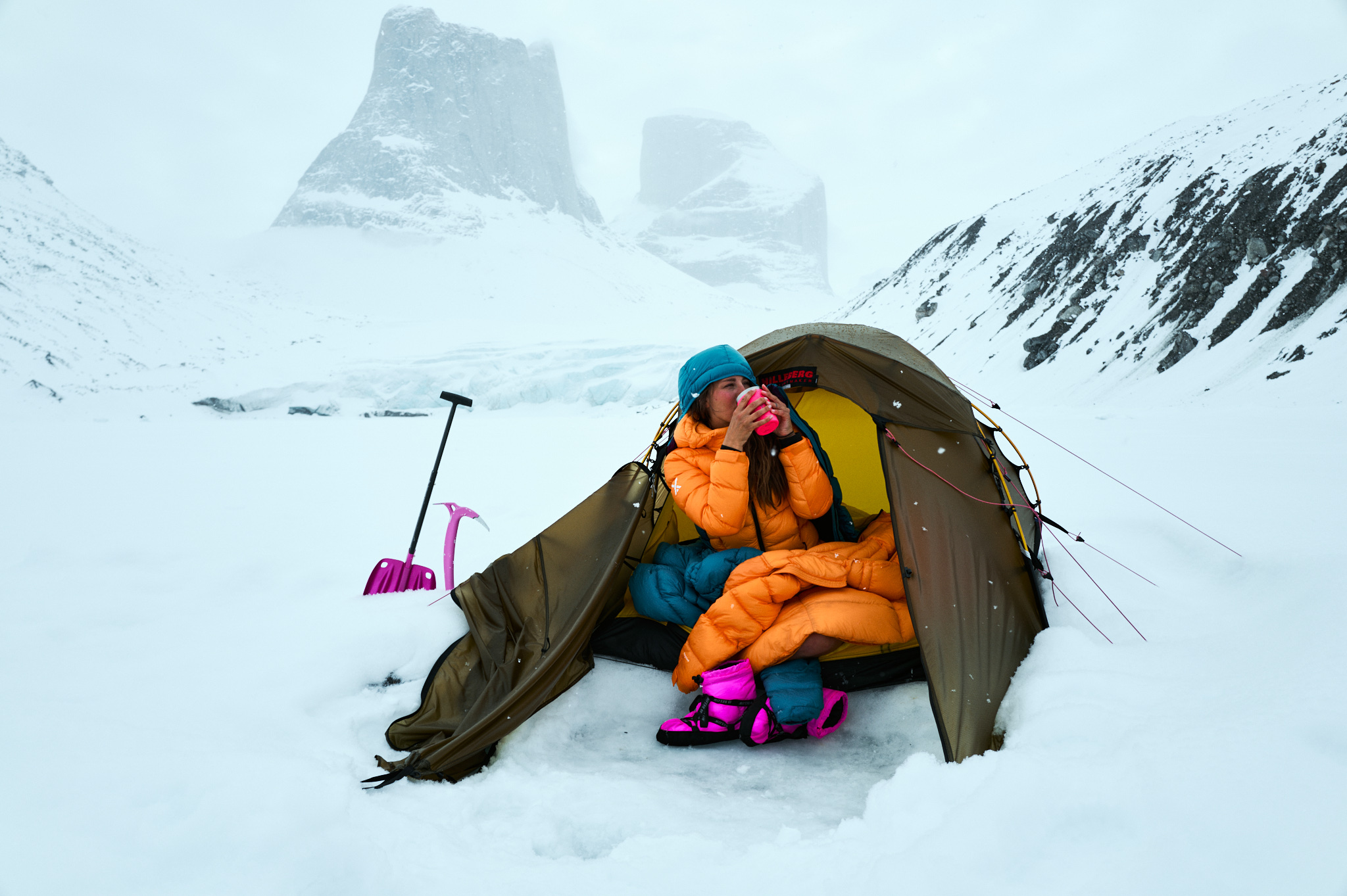
Apart from the obvious challenge of extreme temperatures, I’d say moisture management is one of the biggest difficulties in such a cold environment.
Everything needs to stay as dry as possible because there are very few opportunities to dry wet clothing or equipment. Fortunately, at those temperatures, you’re more likely to encounter snow than rain, but that doesn’t mean staying dry is easy!
You’re constantly moving, skiing, climbing and sweating, so managing your layers and ventilation becomes incredibly important. If moisture builds up inside your clothing, it can freeze and leave you dangerously cold, especially when you stop moving.
And it’s not just about keeping your body warm. Protecting your hands and feet is incredibly important too, because cold injuries can happen surprisingly easily, sometimes without you even noticing.
I actually learned that lesson the hard way on Baffin Island!
When we built an igloo, the weather was absolutely fantastic. I wore gloves throughout the building process because I was handling snow and ice. But once we’d finished, we started taking photos, and because it felt relatively warm, I took my gloves off.
The problem was that I kept crawling in and out of the igloo, and every time I was putting my bare hands directly onto the ice.
I didn’t think much of it at the time, but I ended up with what I believe was frostnip in four fingers. The tips went numb, and it took around two months for the feeling to return completely. Thankfully, everything recovered!
So there I was, in the middle of the Arctic, perfectly prepared for building an igloo, only to injure my fingers while taking photos of it!
It’s a good reminder that in extreme environments, even the smallest things matter. Having the right equipment is essential, but knowing how and when to use it is just as important.
Brand-supported adventures sit at an interesting intersection: the participants want to pursue something meaningful, the brand wants to create something valuable, and the resulting story needs to work for an audience. Where do you think that relationship is at its best – and what would make you uncomfortable about it?
I think the best brand partnerships are the ones where the adventure is genuinely exciting and the brand becomes a natural part of the story, rather than the main focus.
We live in a world where we’re constantly surrounded by advertising, especially on social media. And I think audiences have become very good at recognising when someone is trying to sell them something. The moment content starts feeling like an advert, people often just switch off.
So rather than saying, “Here’s this amazing product, look at it!”, I think it’s much more effective to create something that people actually want to watch.
Show them an incredible adventure, take them somewhere they’ve never been, make them feel excited, inspired or curious. Make them wish they were there with you!
And if the people they’re watching are wearing or using a particular brand throughout that experience, that association can be much more powerful than someone simply telling them to buy it.
Of course, I understand that from a marketing perspective, brands want their products to be noticed. But I think sometimes the less you try to force that attention, the more naturally it happens.
What would make me uncomfortable is having to turn an adventure into one long sales pitch, or being expected to say something about a product that I don’t genuinely believe.
Especially with outdoor equipment, where performance can affect people’s safety, I think honesty is incredibly important.
And after all, nobody opens Instagram thinking, “I really hope someone tries to sell me a jacket today!”
Access to serious adventure often depends on things that aren’t distributed equally: money, time, experience, connections and the right equipment. You’ve found a way to pursue remarkable goals without making mountaineering your profession. What do you think genuinely prevents more people from having adventures of their own, and what would you change first?
I think one of the biggest obstacles is the belief that adventure is something reserved for wealthy people, or people who have unlimited time and freedom.
And I understand where that perception comes from, especially when you look at something like climbing Everest. It’s incredibly expensive, and people often assume that anyone who can afford it must come from a wealthy background.
But that’s certainly not my story.
I grew up in Poland with a single mum who started off as a cleaner. We didn’t have much money. We didn’t even have a colour TV or a car for a long time, and I remember going to school without money for lunch while other children were buying chocolates and crisps.
So I definitely wasn’t born into wealth, and I’m not rich now either.
When I first moved to the UK, I couldn’t speak English and started working in a bar. I used every spare moment to learn the language, even keeping little pieces of paper with English words on them so I could study whenever I wasn’t serving customers.
I knew that if I wanted better opportunities, I had to work towards them. And that’s what I’ve continued doing throughout my life.
So when people ask how I afford my adventures, the answer isn’t simply that I save money. It’s that I’ve spent years working to improve my circumstances, while also making very deliberate choices about how I spend what I earn.
And I’m not the only one. I met a woman on Everest who had spent 17 years saving for that expedition. Seventeen years! That’s how much reaching the summit meant to her.
I’ve lost count of how many times people have asked me how I fund my adventures. But when I start explaining the sacrifices I’ve made, the response is sometimes basically, “Oh, fuck off!”
I think people are hoping there’s some secret way to fund these experiences without having to change anything about their lives. Unfortunately, there isn’t!
And it’s not just money. People often tell me they don’t have time for adventures either. But sometimes it’s about looking at how you spend the time you do have. Could you get your chores done during the week and free up your weekend? Could you use a couple of evenings to plan a trip instead of scrolling through social media?
Of course, everyone’s circumstances are different, but I think we sometimes underestimate how much we can fit into our lives when something becomes a real priority.
And you don’t always need much money to have an adventure.
When I was 20, I wanted to travel but had practically no money, so I hitchhiked across Europe. I made my own sandwiches, slept in a tent and spent hardly anything, but it gave me an incredible experience. I’m not suggesting people should necessarily do the same today, but it taught me that a lack of money doesn’t always have to mean a lack of adventure. Sometimes you just need to be creative.
You don’t have to climb Everest. It could be a weekend hiking in Wales, camping somewhere beautiful or simply exploring a place you’ve never been before.
If I could change one thing, it would be the belief that your current circumstances have to determine what you’re capable of achieving in the future.
You might not have the money, skills or opportunities today. But that doesn’t necessarily mean you can’t work towards having them tomorrow.
And perhaps the biggest thing is to stop waiting for the perfect moment, because that moment might never come.
Finally, you’ve already achieved goals that once might have seemed improbable: the Seven Summits, the Crown of Europe and now an expedition to Baffin Island. When you’ve spent years working towards one extraordinary goal, how do you decide what comes next? Are you still chasing bigger achievements, or are you beginning to want something different from adventure altogether?
That’s actually the easy part!
One of the best things about pursuing adventures is the incredible people you meet along the way. And so many of them are doing things you might never even have considered yourself.
Then you get talking to someone, hear their story and realise, “Hang on, if they’ve done it, why can’t I?”
Suddenly, something that once seemed completely out of reach starts feeling possible. Someone plants a seed in your head, and before you know it, you’ve got another crazy idea on your list!
That’s happened to me so many times over the years.
And right now, the next big one is K2. I’ve finally decided to go for it in 2027. Everything is planned, I’ve arranged the time off work, and I’m incredibly excited about it.
But K2 certainly isn’t the end of my adventure plans. I’ve got plenty of other dreams, many of them inspired by people I’ve met along the way.
One of the big ones is reaching the South Pole, preferably by snowkiting. That would be a completely different kind of challenge, and I’d absolutely love to experience it.
So I don’t think I’m necessarily looking for something different from adventure. If anything, the more I experience, the more I discover there is still to do!
But I do try to focus on one big adventure at a time. Right now, that’s K2.
I’ve got plenty of other dreams waiting in the wings, but first I need to get through this one. Because in mountaineering, you can make all the plans you want, but you never really know how things are going to turn out.
Don’t miss a single adventure
Sign up to our free newsletter and get a weekly BASE hit to your inbox


Other posts by this author
Story • Matthew Pink • Sep 07, 2026
Sparring cows, mythical creatures and handmade trails: welcome to the soulful side of Verbier
We find a completely different experience on offer in the Verbier summer sun.
Story • Matthew Pink • Jun 16, 2026
Bucket-listing on the edge of Rebel County
A wild roving hike'n'bike weekend on the Sheep's Head Peninsula, West Cork, Ireland.
Story • Matthew Pink • Jun 08, 2026
Between the Noise: Two Days of e-MTB Escape in Morocco’s Imlil and Azzaden Valleys
A simple plan: two days, two valleys, one Scott e-MTB, a bag of snacks, water and no schedule beyond daylight.
You might also like
Photo Essay • BASE editorial team • Mar 18, 2024
Hunting happiness through adventure in Taiwan
BASE teams up with adventurer Sofia Jin to explore the best of Taiwan's underrated adventure scene.
Story • BASE editorial team • Nov 21, 2023
Five Epic UK Climbs You Should Try This Winter
Craving a snowy mountain adventure? Inspired by the Garmin Instinct 2 watch (into which you can directly plan these routes), we've compiled a list of five of the best for winter 2023-24!

Video • BASE editorial team • Jul 21, 2023
Merging Two Lives: The Personal Journey of Hamish Frost
The challenges and triumphs of embracing sexuality in the outdoors