Sparring cows, mythical creatures and handmade trails: welcome to the soulful side of Verbier
Feature type Story
Read time 15 mins
Published Sep 07, 2026
Author Matthew Pink
Photographer Matthew Pink
There’s an old story told in the high pastures above Verbier, the kind that gets passed down at candle-lit kitchen tables rather than in natty guidebooks. Once, they say, Sery-Laly and the peaks around it were green all year – properly green, generous, the sort of pasture that made a herder’s life a breeze. Then an old woman came through, poor and cold, and asked the wealthiest of them for a measly cup of milk. But they set the dogs on her instead. Not very Swiss of them, but the damage was done. So, she cursed the mountain, and by morning the grass was gone under ice that has never fully melted since.
This story is all the more fantastic for reasons that have nothing to do with folklore. Because every summer, without any curse-breaking, canine gnashing or divine intervention whatsoever, Verbier and the Val de Bagnes unfussily do the opposite trick. The white runs – the ones built for royalty, for Bear Grylls, for Hollywood, and for the pop star who has a chairlift named after him – soften back into lush pasture and singletrack and the valley becomes something else entirely.
This Verbier, a more earthy and soulful version, was here long before any of that, and will be here after the last influencer’s gone home. Over three days in the heatwave-cloaked summer of 2026 we went looking for the people who actually hold this valley together: a mountain guide taking over her family’s alpine hut, a rider who found his calling, and a trail-builder with a chainsaw and a philosophy. Custodians of Verbier’s soul.
Altitude, herders and heresy
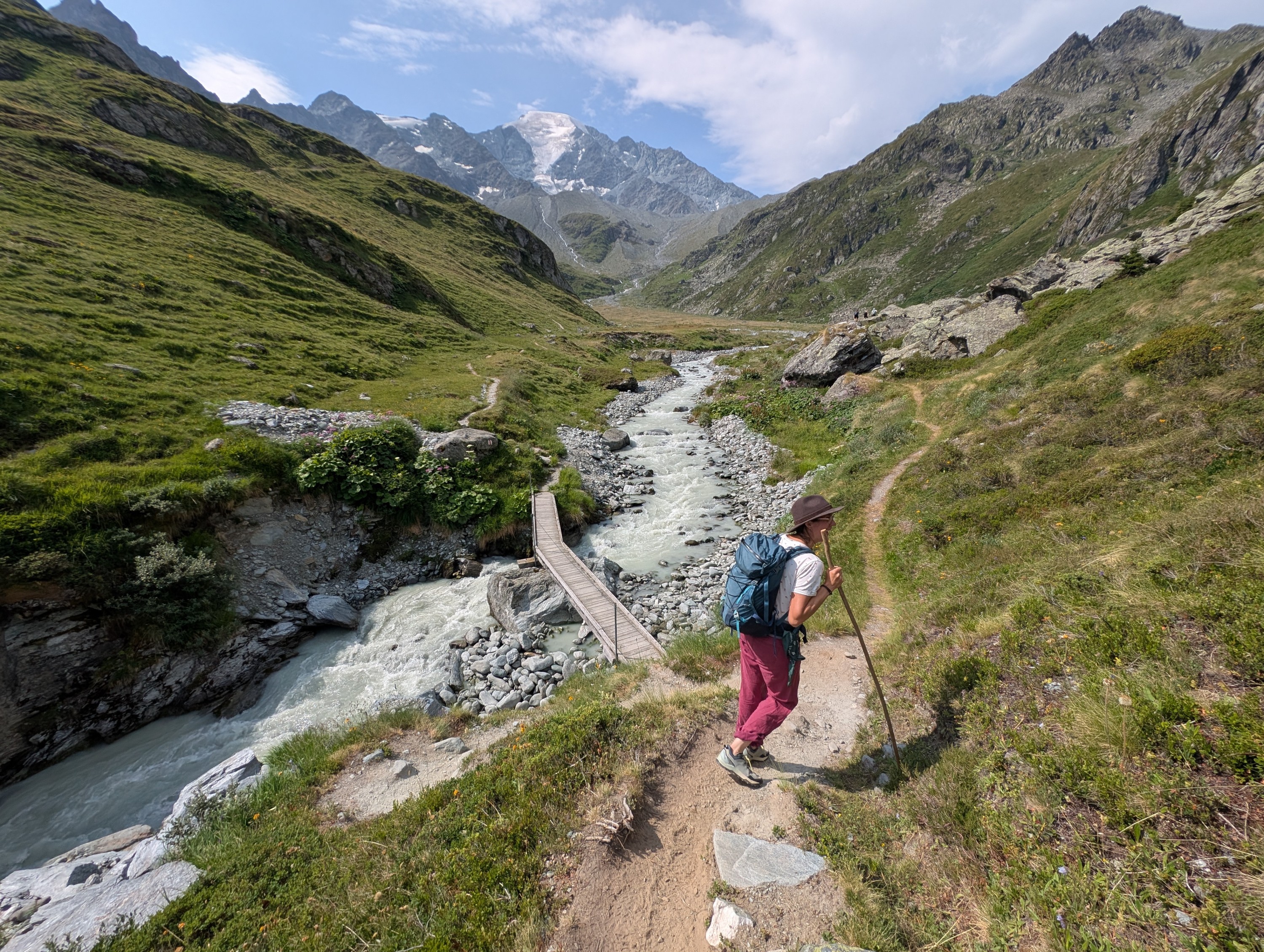
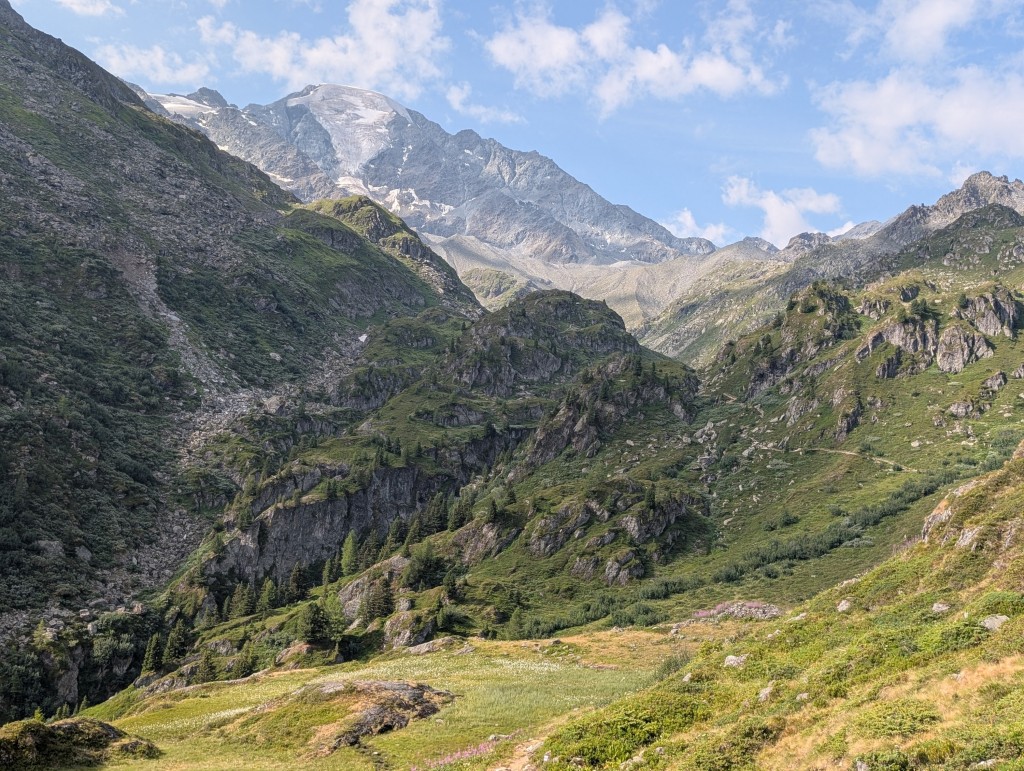
We start on foot. Five hours, roughly fifteen kilometres, the best part of a kilometre of climbing, walking with the serene Francine Vogt, who is a mountain guide, a leather craftswoman, and, crucially, part of a herding family that has worked these slopes for generations.
Sery-Laly is one of the oldest alpine pastures in the Val de Bagnes. There are documents placing it here as far back as 1340. Francine’s family runs it now and soon it’ll be entirely her and her husband David’s, taking the baton from her parents the way it’s been passed along for the better part of seven centuries.
We light out from the ître de Pindin, a shepherd’s dwelling belonging to Francine’s family that’s been gently done up and turned into a refreshment hut open when the weather allows. You can stay here too over July and August when the shepherds sling their crook. This is also where we will bunk down for the night. It sits with a view toward Petit Combin and a cowbell’s throw away from the more commonly frequented Cabane Brunet. There are about sixty dairy cows up here cavorting around the ître producing what Francine calls ‘flowery’ milk. She’s not wrong, as we find out later.
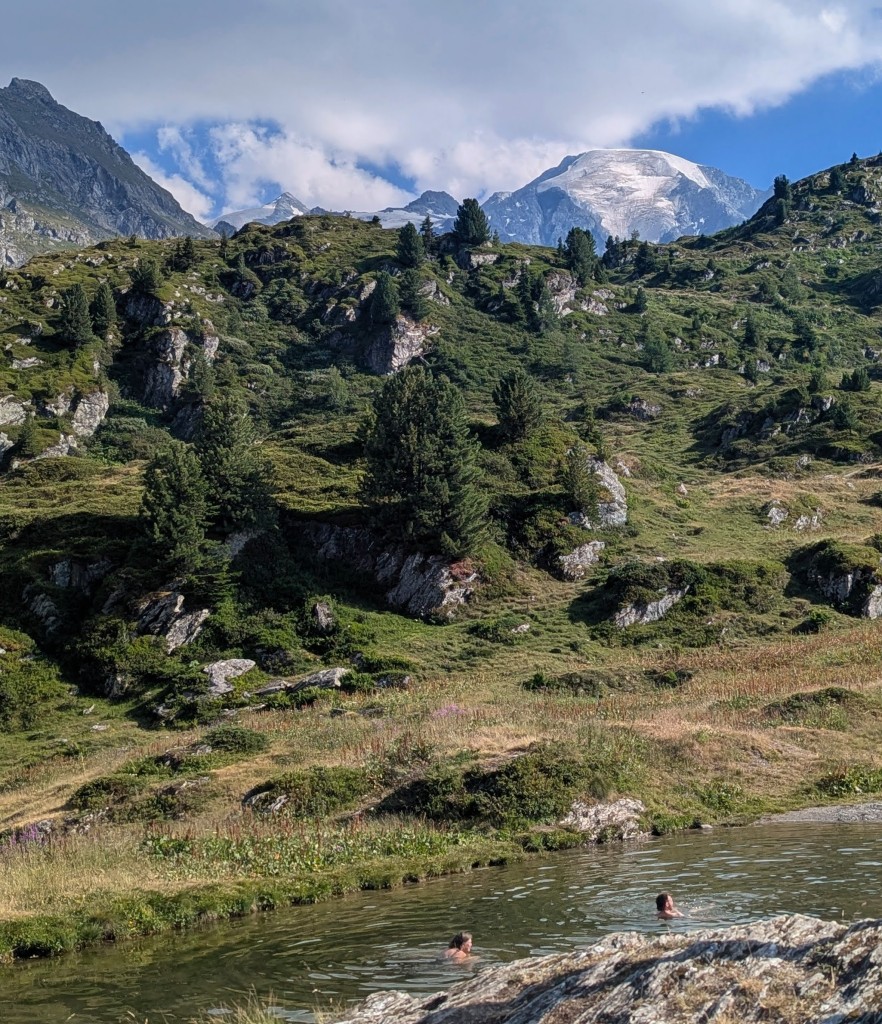
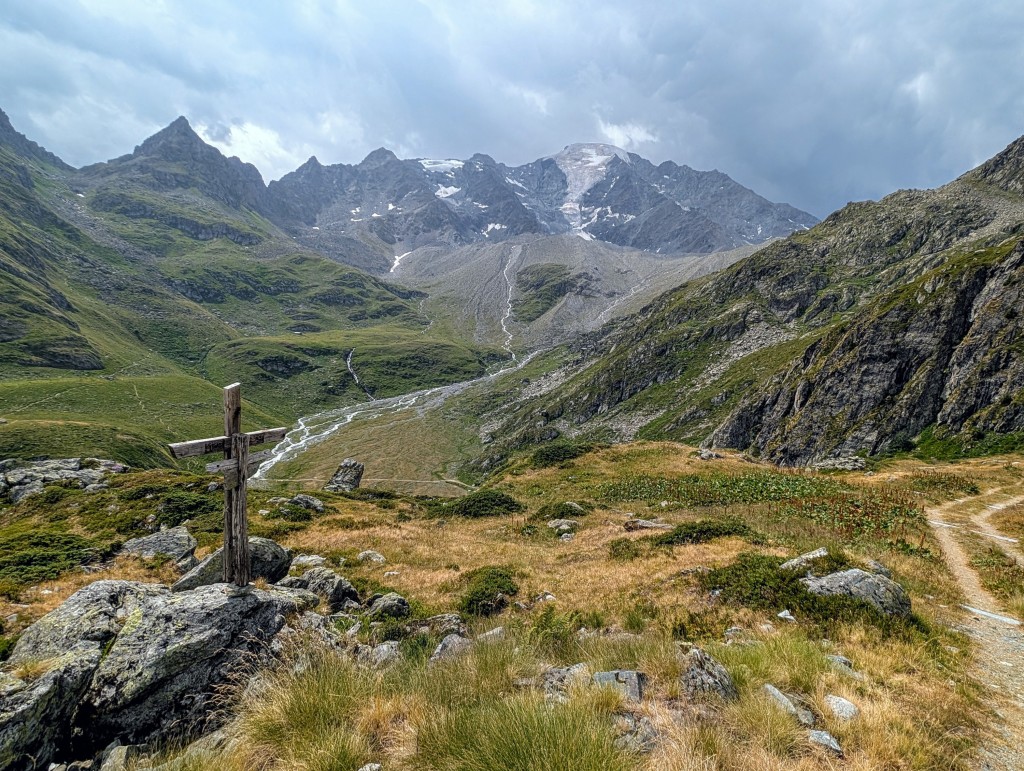
As we hike, marmots send up sharp whistles down the hillside like a relay, warning every fellow furry in earshot of our approach. The path alternates between bare rock and a little scree with the soft cushioning of alder and alpenrose but is always pleasingly grippy underfoot after the extended dry period. We pass by the Cabane Brunet and its perfectly positioned mini-lake where the hot-and-sweaty cool off next to palm-sized trout. The panorama just keeps widening as we rise and soon we can glimpse the Grand Combin massif and the man-made waterfall topping up the Lac de Mauvoisin. Unflustered, Francine expertly hops from rock to verge, pointing out rare orchids as we go. Of which there are lots.
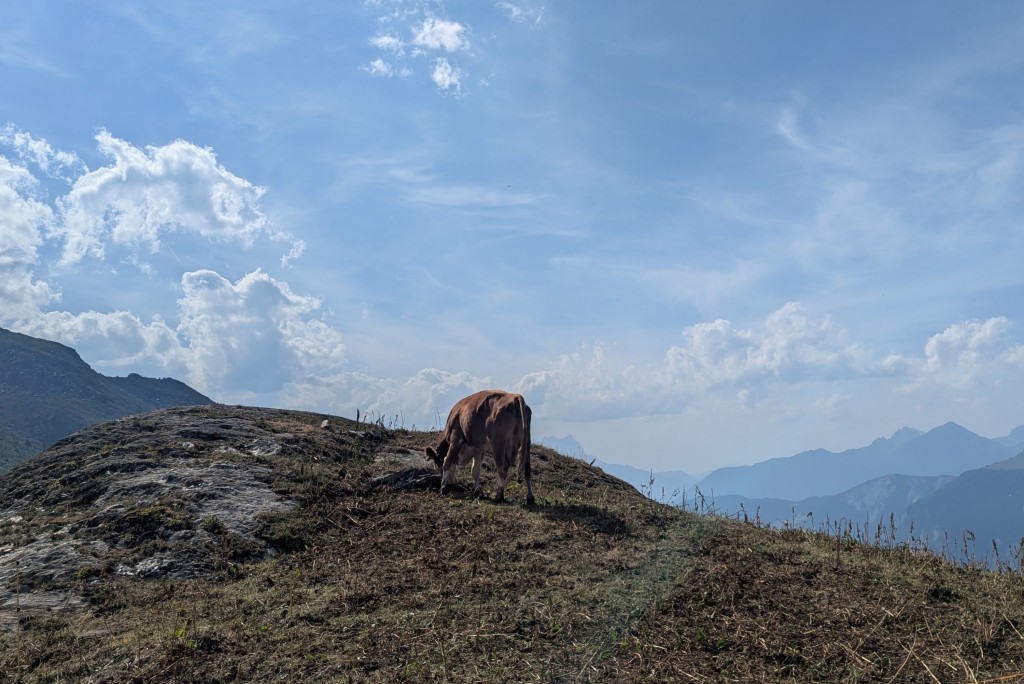
The Hérens cattle that also graze these slopes are famous for one thing above all: they scrap. It’s an instinct, a way of settling who’s in charge of the herd, and it happens all along the valley, formalised these days into the Combats de Reines, the Queen Cow Combats, with tribute statues marking the roads as you make your way up the valley. Up close they’re canny and curious, pudgy-nosed, happy to nuzzle a stranger’s hand. Turn your back, though, and they’ll be right at it.
Local lore holds that the Queen Cow isn’t just the toughest animal in the field. She’s supposed to sense the weather coming, know where the danger is before anyone else does, and stand as a kind of protective matriarch over the whole pasture. Leave a herd without a strong queen, the story goes, and the mountain demons and wolves move in. We’re told in hushed tones by Francine that there’s a literal lone wolf who still turns up every now and then, gunning for the weaker calves. Not much of a gap between fact and fiction up here in the thinning air.
For lunch we alight at the perched Buvette de Pindin (“C’est vraiment le Spot”, says Francine admiringly and with no need for Google Translate) for a raclette richly supported by home-pickled wild garlic buds, cornichons and crusty, fresh bread. Father Marc is about and so there’s a small glass of homemade génépi to finish off too. Mustn’t grumble.
Marc, you notice incidentally, is missing an index finger. What happened there then Marc? We expect some sort of dairy machinery accident. But no, a farm rabbit bit it clean off when he got his hand too close to the babies. Yowsers.
Underneath the looming glacier, there’s still snow sitting up at 2,300 metres, streaked red with weird algae, bloodshot-looking against the white. After a day of curses and queen cows, it’s hard not to read something into it.
We also get a proper taste of the ‘danger’ part of the valley myths that same afternoon. The morning is glorious – properly warm, big skies – but by four o’clock we’re sheltering from a violent deluge, lightning veins the sky and thunder cracks around the peaks. The cows don’t so much as flinch. They know exactly what to do when sky electricity comes through; we’re the ones caught out, ducking into Francine’s refuge for a reassuring hit of stove-top coffee.
The valley in another gear
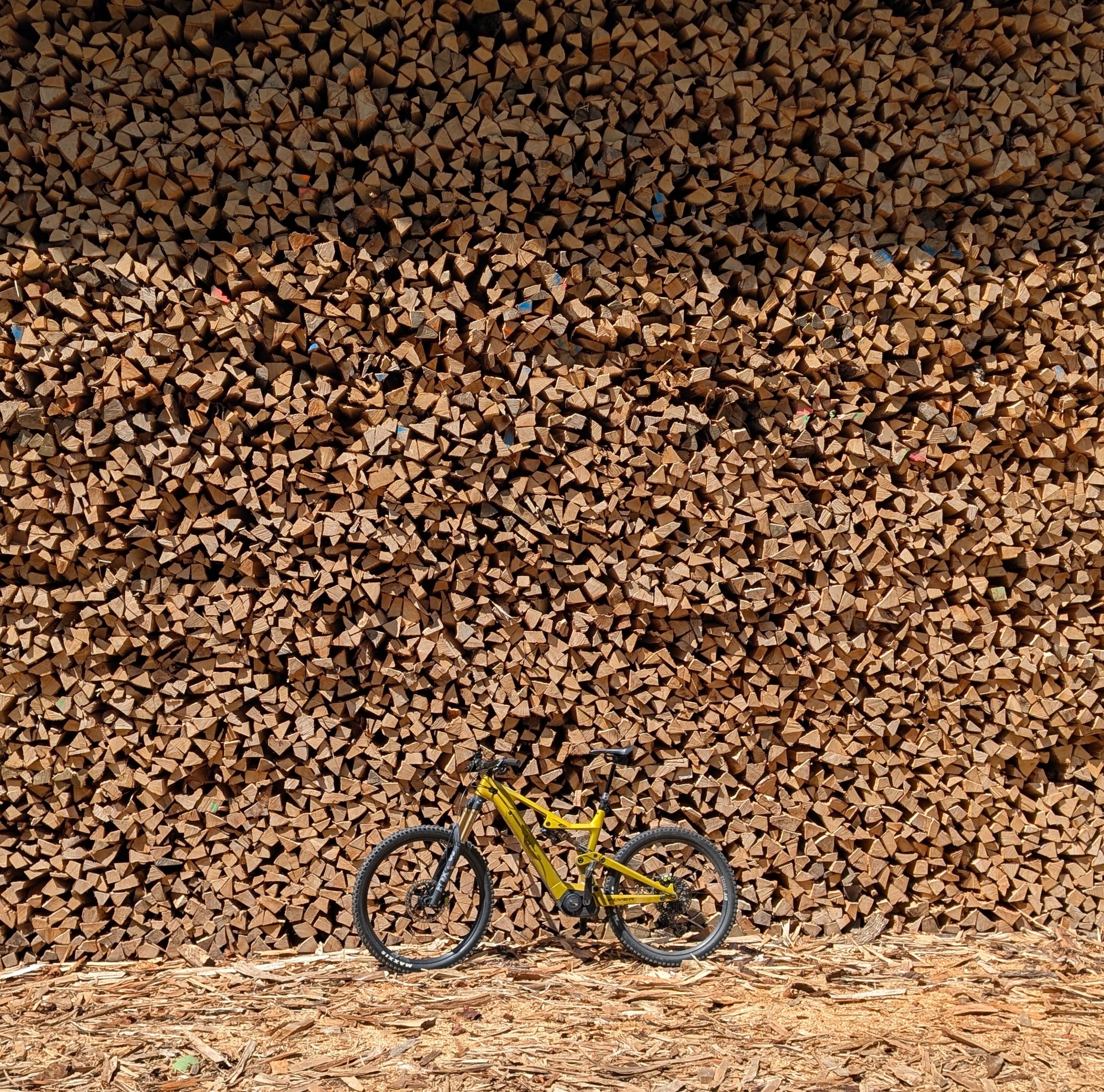
Time for two wheels. The morning route on paper looks more than agreeable: Médran to Croix de Coeur, over to La Chaux, down through Sarreyer to Le Châble. Thirty-five kilometres, gaining about 1,280 metres and shedding nearly 2,000 by the time you roll back into the valley floor.
Our guide for the two-wheeled leg is Sam – Perth originally, six years in Chamonix, Verbier home now – who’s raced across Australia and New Zealand on road and track and clearly hasn’t stopped moving much since. He talks passionately about the valleys the way you’d expect from someone who’s ridden every inch of it and still finds something new every day.
“Chamonix has the reputation. Verbier just has the trails. It’s massively underrated,” says Sam.
Sam speaks with genuine affection for the place and still carries the glow of someone who married in a similar abode to the ître just a couple of weeks ago, a couple of kilometers across the valley. Down-to-earth, easygoing and a considerate coach, Sam seems to share lots in common with Francine. There’s a type here away from the snow’s glare.
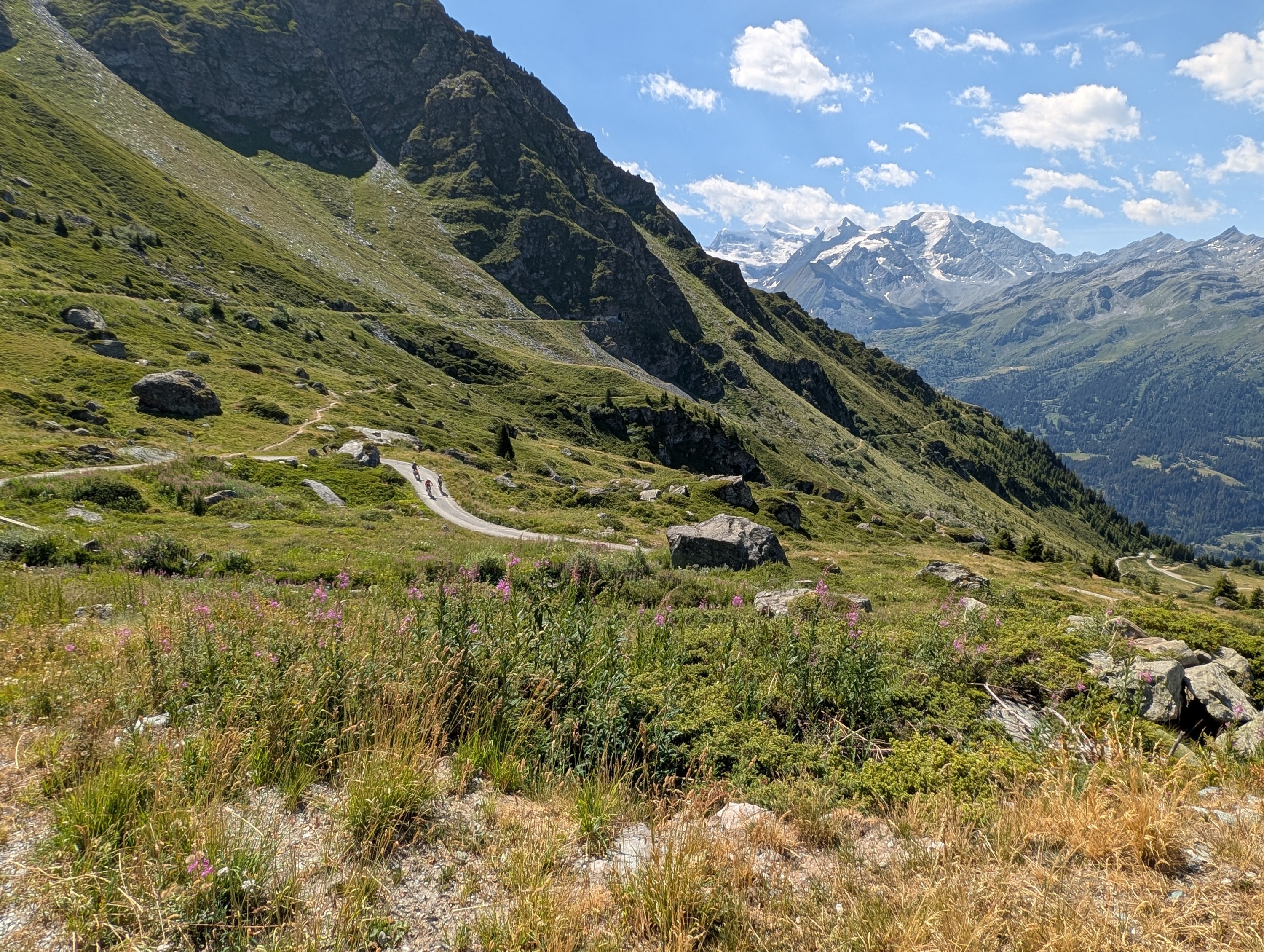
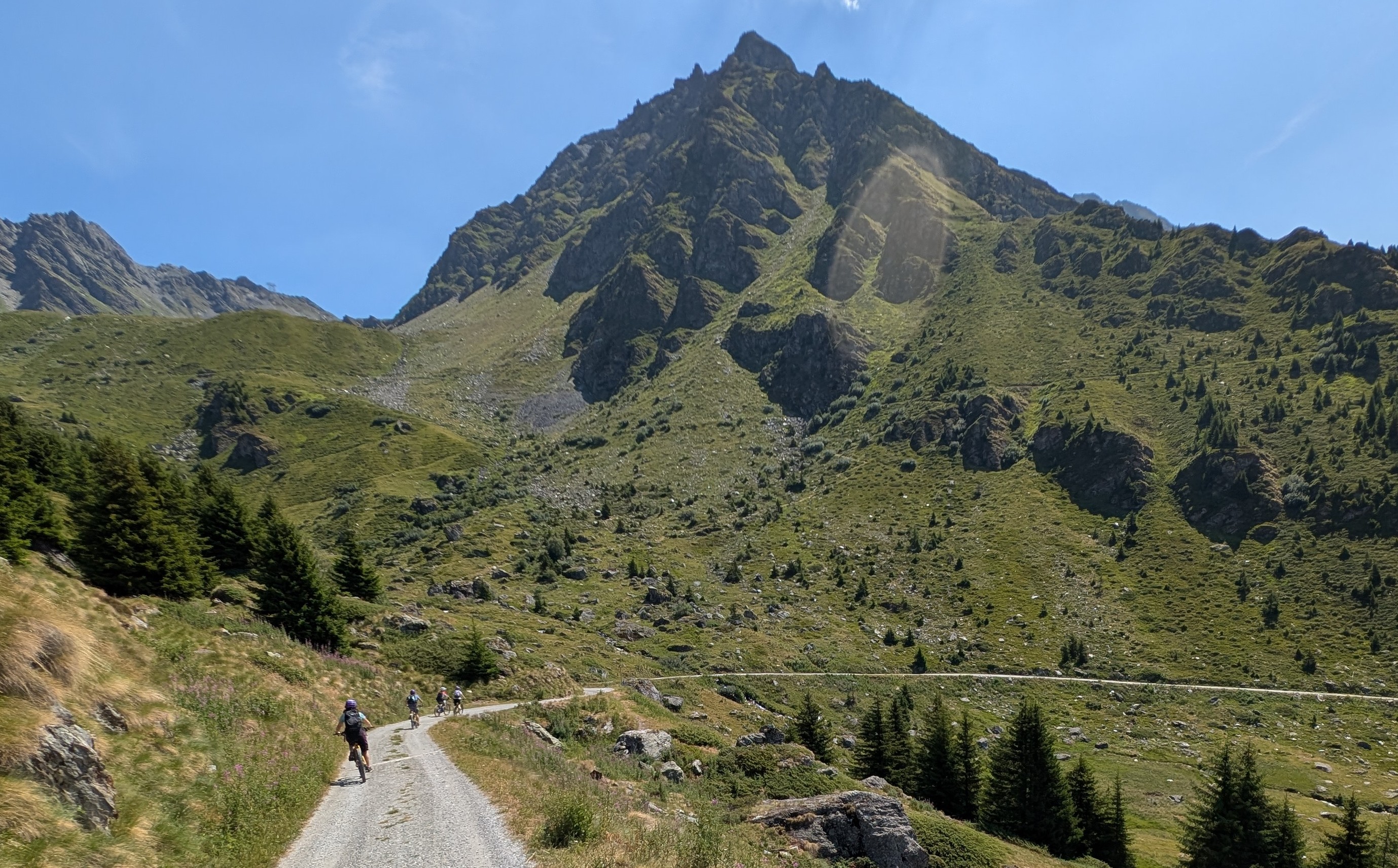
The climb to Croix de Coeur is winding and grinding rather than brutal, which gives you plenty of time to actually look around instead of just watching your front wheel. At the top we get a proper surprise: a small propeller plane circling then wobbling in to land uphill (!) on a strip that can’t be much bigger than a cricket pitch.
Over at La Chaux we stop at Le Dahu for café au lait, which sits at 2,265 metres and comes with its own small legend attached – the dahu being a strange, mythical creature said to graze this exact pasture, one leg shorter than the others so it can walk the mountainside without falling over (ask a Swiss friend to explain it and watch them try to keep a straight face).
Along the way we refill our flasks at carved wooden troughs, tree trunks hollowed out and kept constantly topped up with spring water that is cold and clean. The final stretch is down through Sarreyer to Le Châble and switches character completely; it’s proper 4×4 track now, pastures giving way to forest, forest giving way to a hamlet that looks like it hasn’t needed to change much in a hundred years. Marmots scatter and whistle as we pass.
Later that afternoon I peel off solo and eastward, into different country – past Les Établons, Maison de la Forêt, down towards La Tzoumaz – before climbing back over Savoleyres into Verbier.
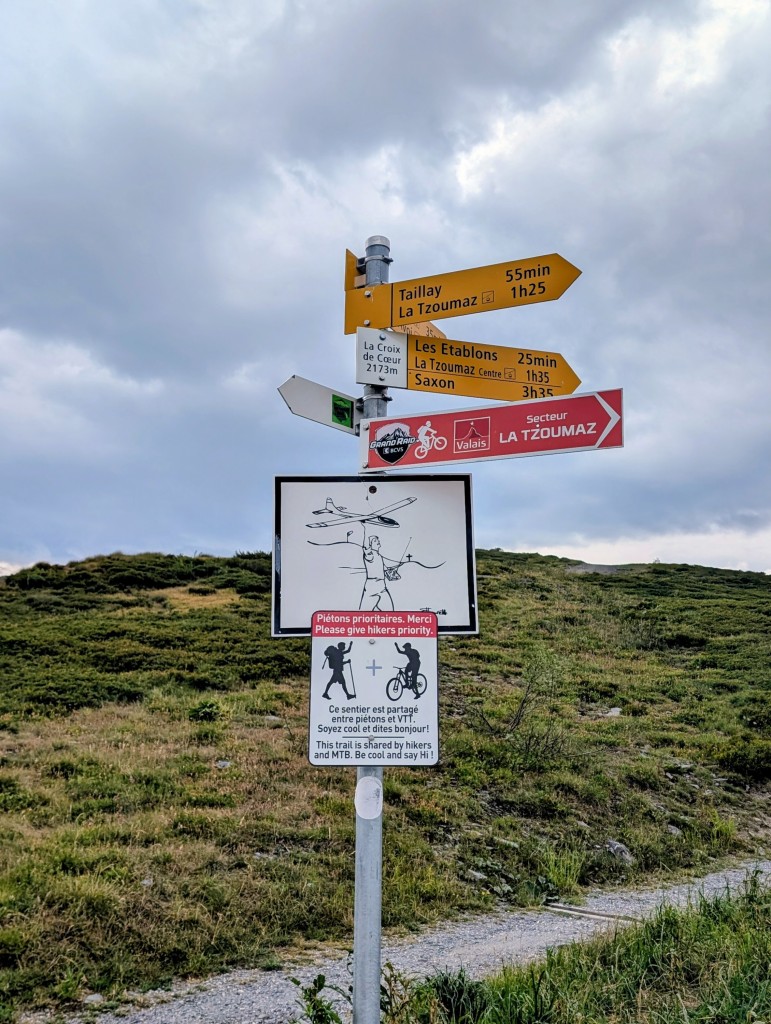
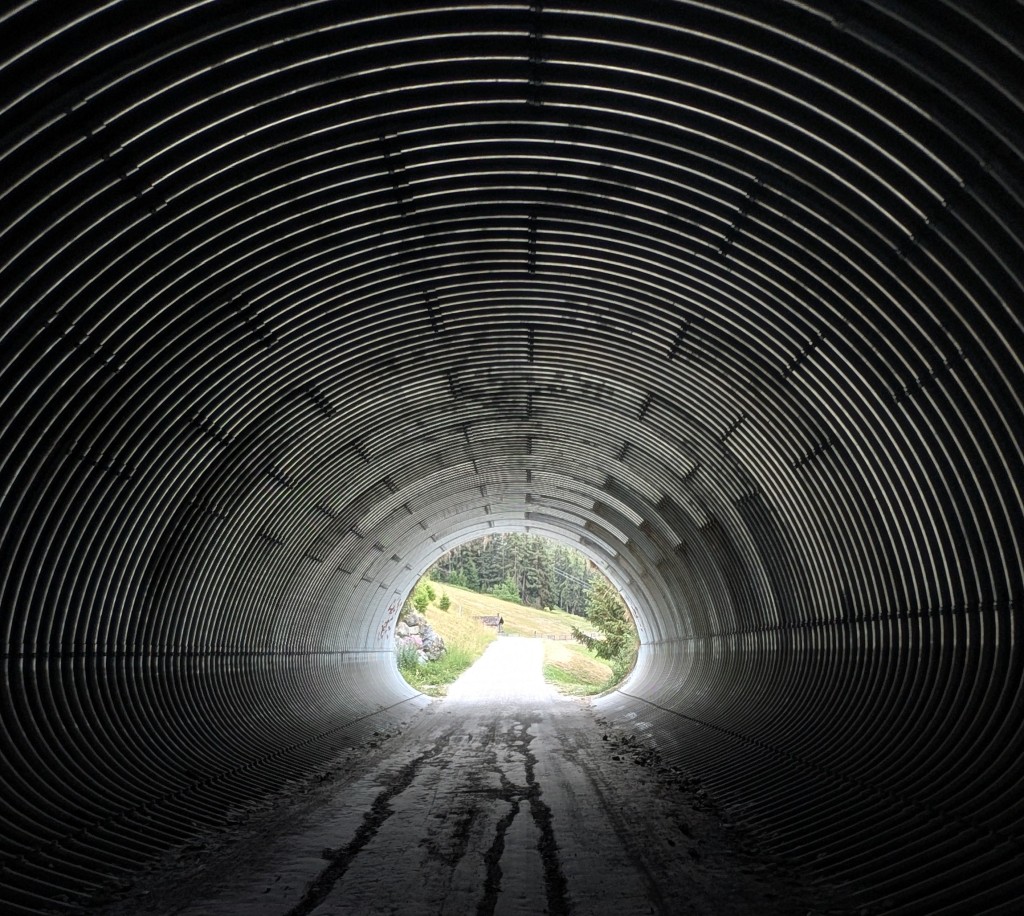
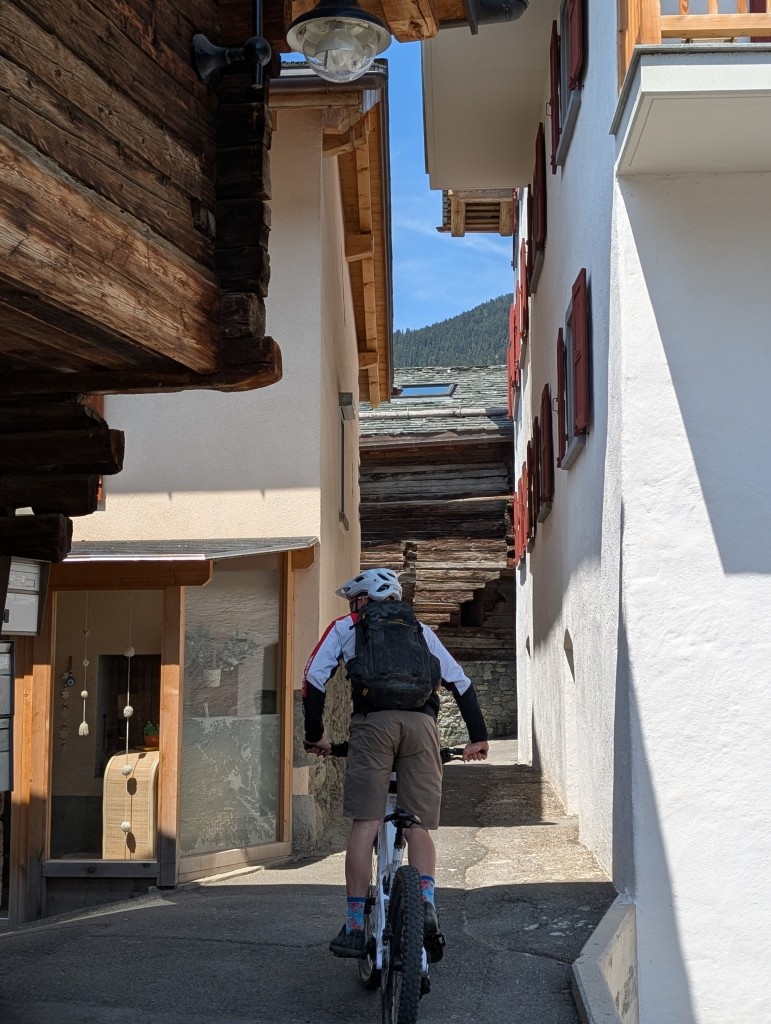
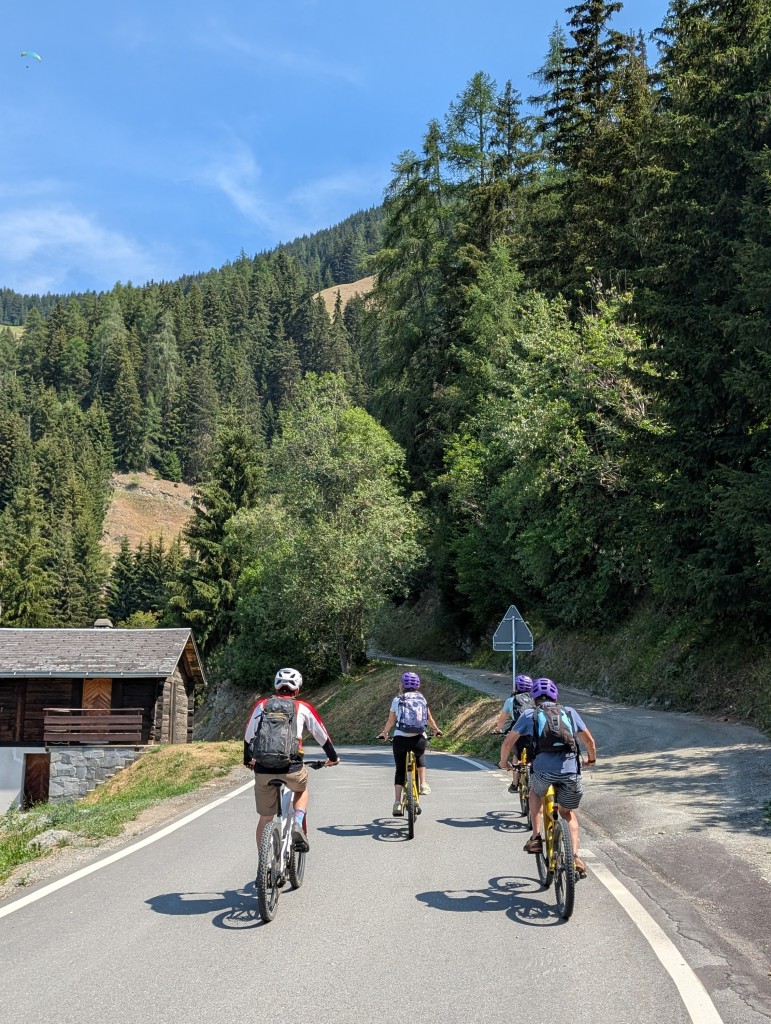
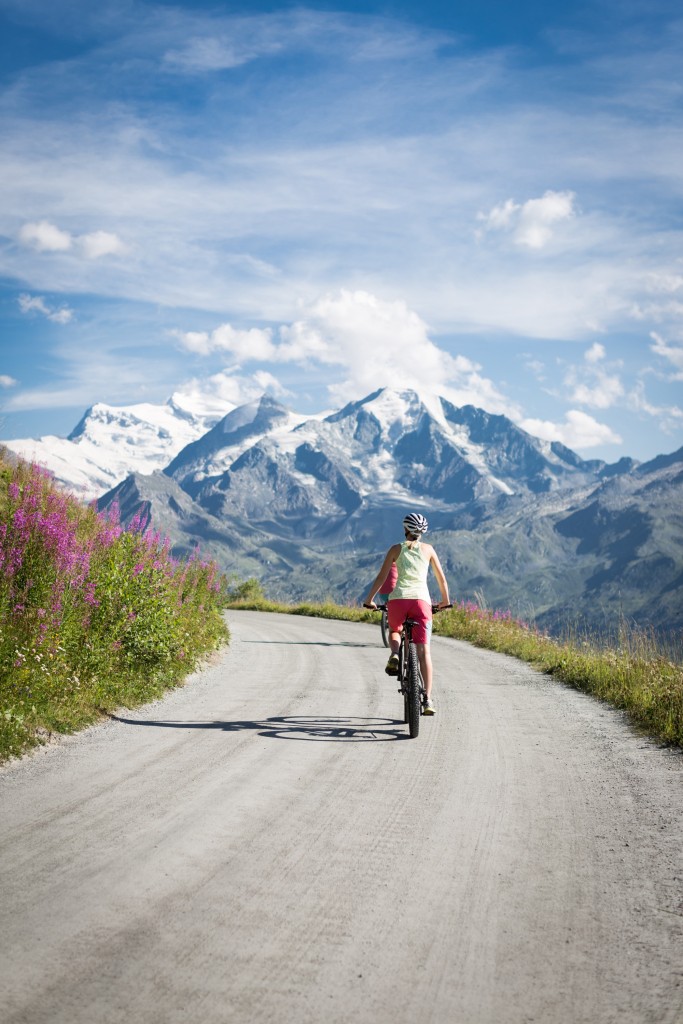
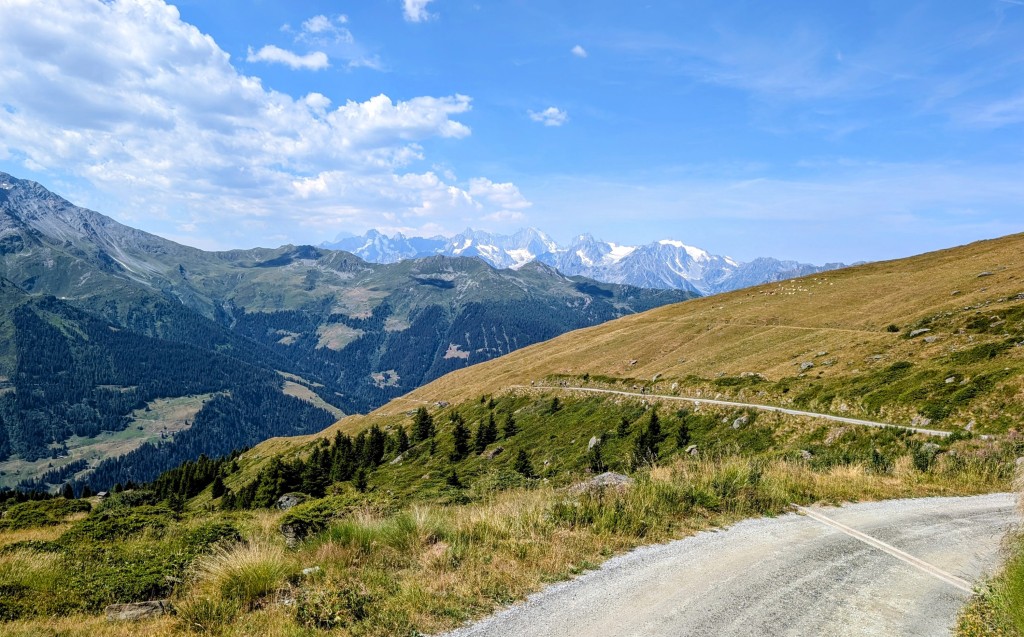
This ride is tighter, quieter and wilder and a pleasing counterpoint to the morning’s efforts. The broad, open ski slopes give way to tighter ribbons of singletrack threading through spruce forest where the air feels cooler and smells faintly of pine resin and damp earth. The trail is narrower too, rootier and more playful. Near Maison de la Forêt the woodland begins to thin into scattered alpine pasture. Old irrigation channels called ‘bisses’ trickle beside the path, weathered barns lean gently into the hillside, and the occasional Hérens cow lifts its head before returning to the more serious business of eating. It feels strangely private. The only soundtrack is cowbells, birdsong and the occasional buzz of an e-bike climbing in the opposite direction.
The route forms a fitting full stop to the day: not the valley’s gnarliest descent or most famous trail by any stretch, but perhaps the clearest reminder that the best way to get under Verbier’s skin isn’t always to aim for the highest summit.
Shaping trail satisfaction
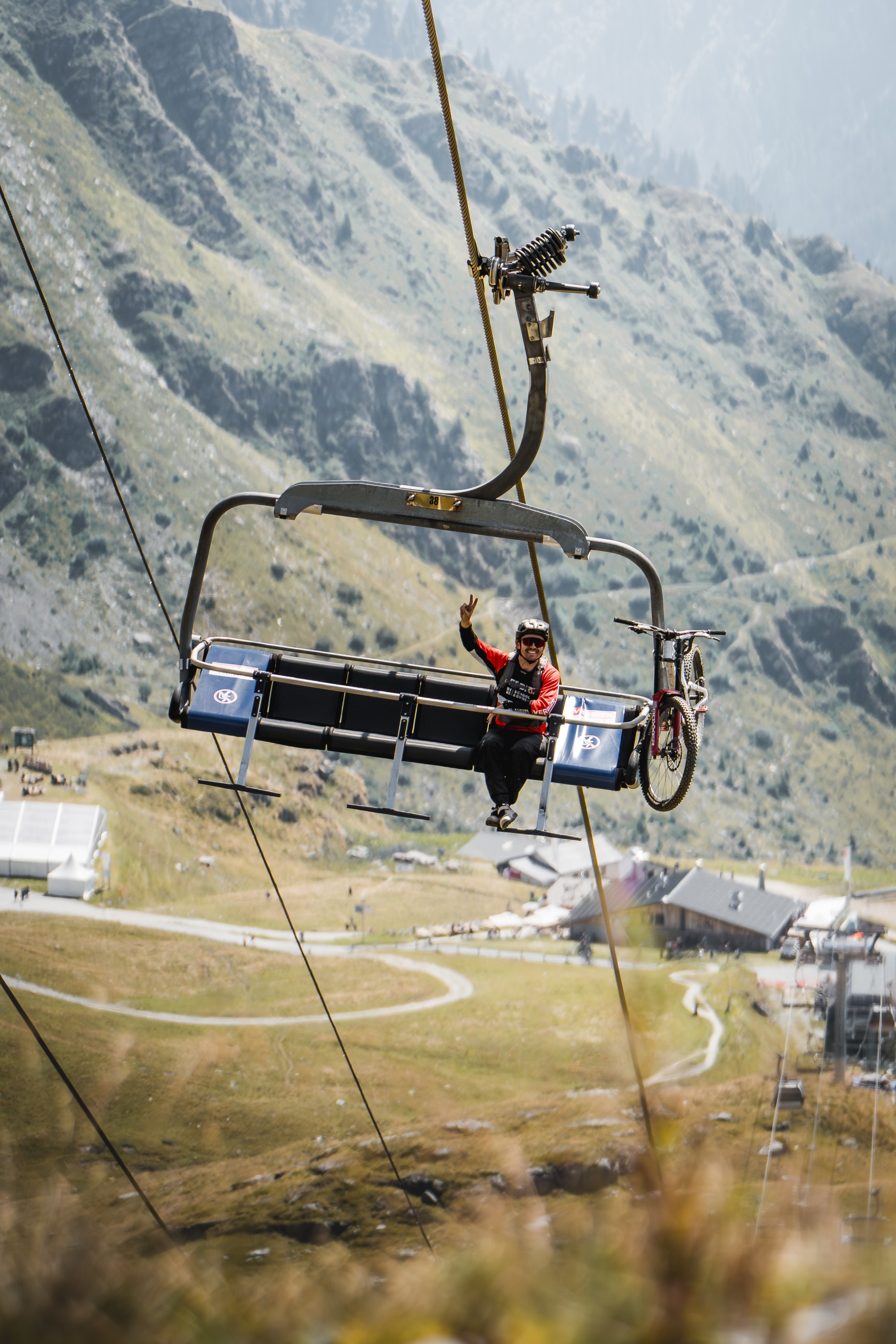
First up, the numbers alone are worth a mention: 220 kilometres of mountain-bike routes around the valley, including around 75 kilometres of pure singletrack, plus 19 kilometres of downhill trails spread across nine runs. Five of those stay open from early June right through to late October, with the highest starting at 2,500 metres. But numbers are the least interesting thing about Verbier Bike Park, and the man running it would probably be the first to tell you that.
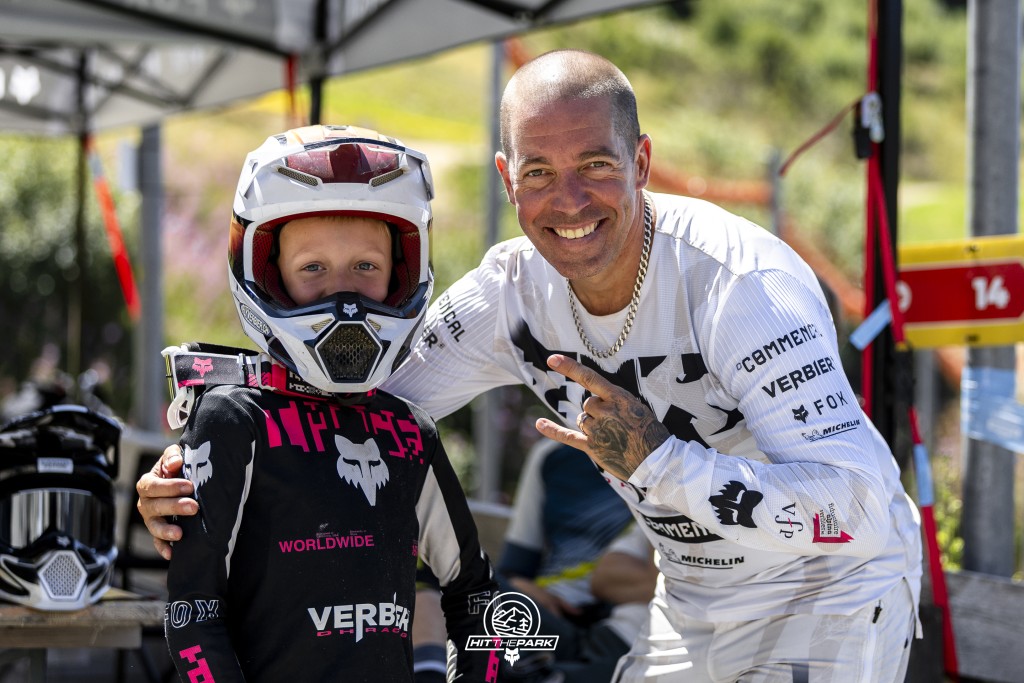
Fabrice Tirefort or ‘Trifon’, to absolutely everyone it seems – used to race downhill at World Cup level. Now he’s in charge of every trail in the park, and it shows in the way he talks about them: as things that need love and attention.
Ask Trifon what motivates him and the answer isn’t really about downhill racing, technical trails or chasing the next adrenaline hit. It’s the sheer variety of what mountain biking can offer, and, more importantly, the people it can bring into the landscape.
He talks about the pleasure of seeing everyone from young beginners to elite riders sharing the same mountain, and about building a network that gives different disciplines and abilities room to flourish. There’s an obvious satisfaction in creating something that people genuinely enjoy.
There’s a responsibility attached to that, too. Every new project has to negotiate permits, the natural environment and the needs of other mountain users. Their ambition isn’t simply to build more trails, but to create a coherent network that works with the mountain rather than against it.
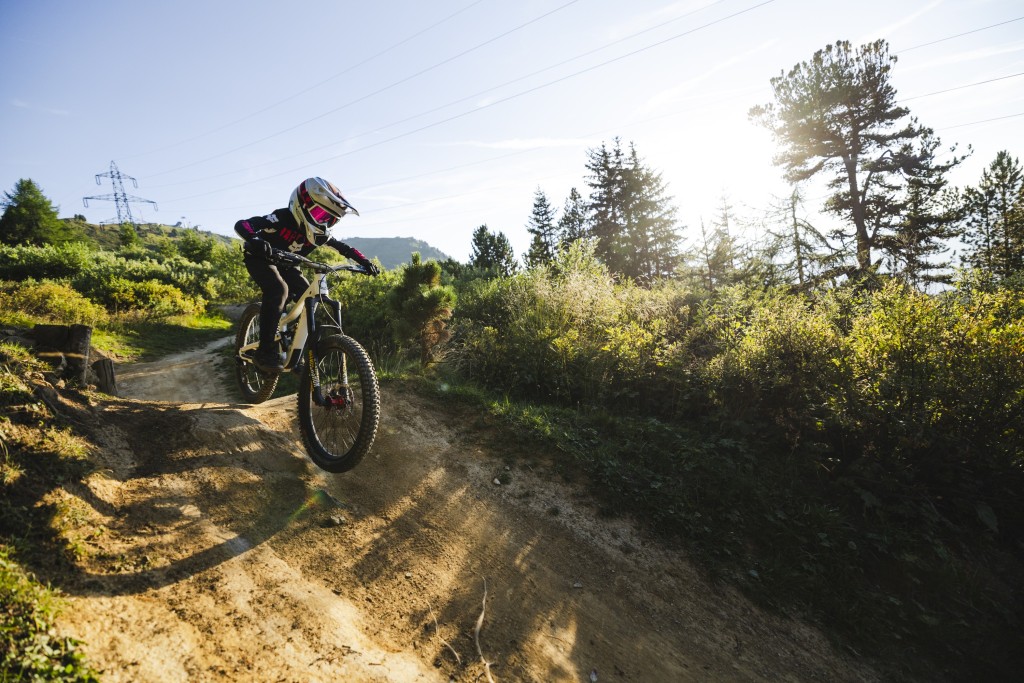
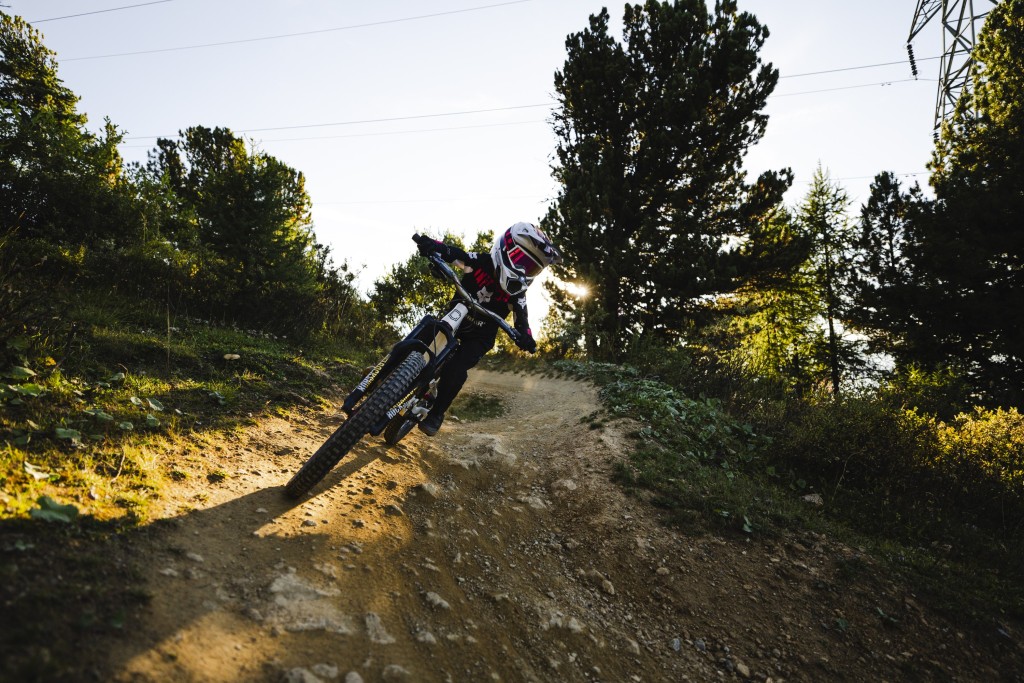
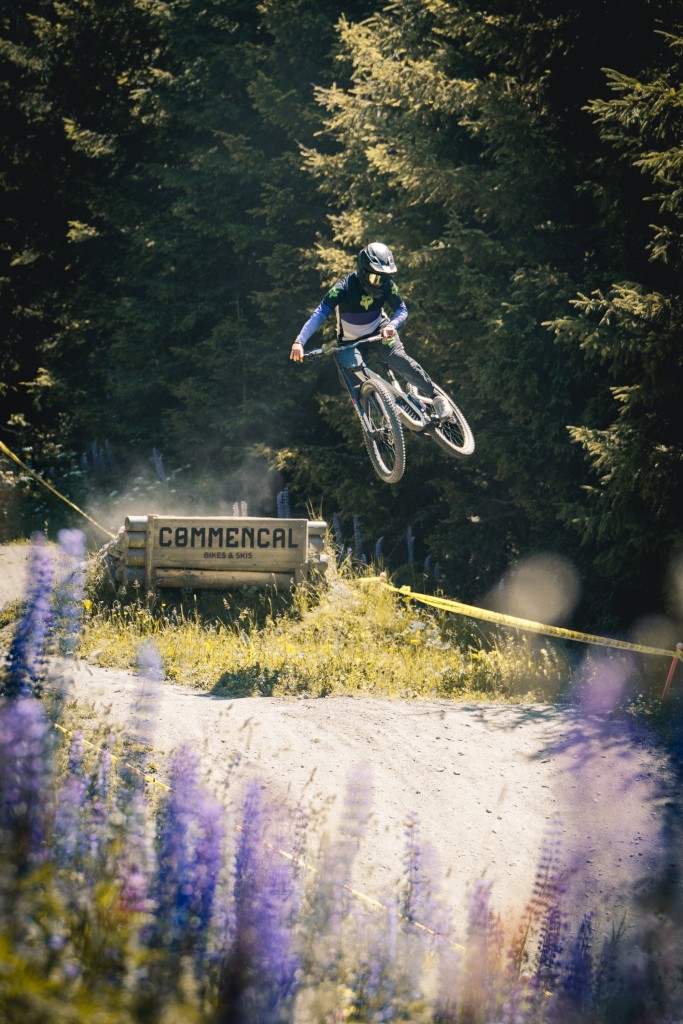
The growing network now offers everything from flow trails and wilderness routes to proper bike-park tracks. The area is vast and surprisingly varied, with the lifts stitching the different riding together. There’s Tsopu, the blue flow trail, wide and machine-built, gentle rollers that beginners can ride straight and faster riders can double up if they fancy it. There’s Wouaiy, red and properly technical, rock gardens and root sections that change depending on the line you pick, the dirt still holding its grip from overnight rain. There’s the black run – they call it Woooohhh, (no explanation necessary is there) – starting with a ten-foot drop into a run dressed with wooden North Shore features, skulls and skeletons scattered along the way for good measure.
And then there’s Race Track. Old-school downhill, straight out of the start gate into a boulder field with lines running in every direction, tightening up through roots and gaps the further down you go, saving the fastest section for the very end, right where the crowds gather to watch.
What stays with you, though, isn’t any single trail – it’s the way Trifon – and Sam, who is one of the nine trail shapers here – talks about how they’re built. The red, the black, Race Track: all handmade, all maintained by hand, by a dig team that can be out there with tools the same afternoon something needs fixing even in high season.
There’s a longer more tension-filled story underneath all this too – about the Swiss preferring their winter sports and their football, and about how much of an uphill argument it’s still been, getting people to take MTB half as seriously as the season everyone already knows Verbier for. Trifon and his team are being rewarded by their patience and tenacity. They’ve quietly kept the faith and now it’s paying off.
Off with the bias lenses
Verbier will always partly be that version everyone already knows – ‘Verbs’ – where royalty, Hollywood,and popstars frolic, all World Ski Awards and glossy branding. Fair enough, it’s earned that reputation the hard way, on genuinely excellent skiing. But spend three days off-piste in the summer months and you meet the valley’s alter-ego personified by Francine and David taking on seven centuries of grazing rights one season at a time, Sam who came for a stopover and never really left, Trifon and his dig team out there seven days a week with tools in hand, relentlessly rebuilding whatever the mountain’s shifted since they last looked.
Trifon remembers a time when perhaps twenty people mountain biked in Verbier and the lifts only ran for a few weeks in July and August. Now the growth of mountain biking is helping create a year-round ecosystem, bringing more people into the valley and supporting the restaurants, hotels and businesses that rely on them. Winter may still be massive, but summer is increasingly becoming part of Verbier’s identity too.
Nobody’s naming a chairlift after any of these guys. But they’d probably tell you they don’t especially want one either. Maybe that’s the real lesson in the Queen Cow myth, when you think about it properly – every pasture needs somebody keeping the wolves off, sensing the weather before it turns, holding the whole thing together while everyone else enjoys the thrill.
Tempted to try a trip like this?
Here’s what you need to know
For every night spent in Verbier, Val de Bagnes – La Tzoumaz, visitors receive a free Verbier Infinite Playground (VIP) Pass which offers discounts and privileged access to the entire area throughout the summer season. It is provided free of charge to all guests.
With the VIP Pass, you get a range of benefits, including a 50% discount on lift passes with the daily bike pass.
For Transfers use Travel Switzerland (for all train travel).
‘Point-to-point’ tickets start at £40 one-way.
For more information about Verbier, visit www.verbier.ch
Don’t miss a single adventure
Sign up to our free newsletter and get a weekly BASE hit to your inbox







Other posts by this author
Story • Matthew Pink • Jun 16, 2026
Bucket-listing on the edge of Rebel County
A wild roving hike'n'bike weekend on the Sheep's Head Peninsula, West Cork, Ireland.
Story • Matthew Pink • Jun 08, 2026
Between the Noise: Two Days of e-MTB Escape in Morocco’s Imlil and Azzaden Valleys
A simple plan: two days, two valleys, one Scott e-MTB, a bag of snacks, water and no schedule beyond daylight.
Story • Matthew Pink • May 30, 2025
Smuggler lanes and donkey trails: e-MTB in Andalusia
Hazy days zig-zagging the Andalusian sierra through a mesh of secret trails
You might also like
Story • Matthew Pink • Jun 16, 2026
Bucket-listing on the edge of Rebel County
A wild roving hike'n'bike weekend on the Sheep's Head Peninsula, West Cork, Ireland.
Story • Matthew Pink • Jun 08, 2026
Between the Noise: Two Days of e-MTB Escape in Morocco’s Imlil and Azzaden Valleys
A simple plan: two days, two valleys, one Scott e-MTB, a bag of snacks, water and no schedule beyond daylight.
Story • Matthew Pink • May 30, 2025
Smuggler lanes and donkey trails: e-MTB in Andalusia
Hazy days zig-zagging the Andalusian sierra through a mesh of secret trails